


4 min read
Why Electrical Test Equipment Drifts (Even When It 'Seems Fine')
 Joe Moser - CEO
September 22, 2026
Joe Moser - CEO
September 22, 2026
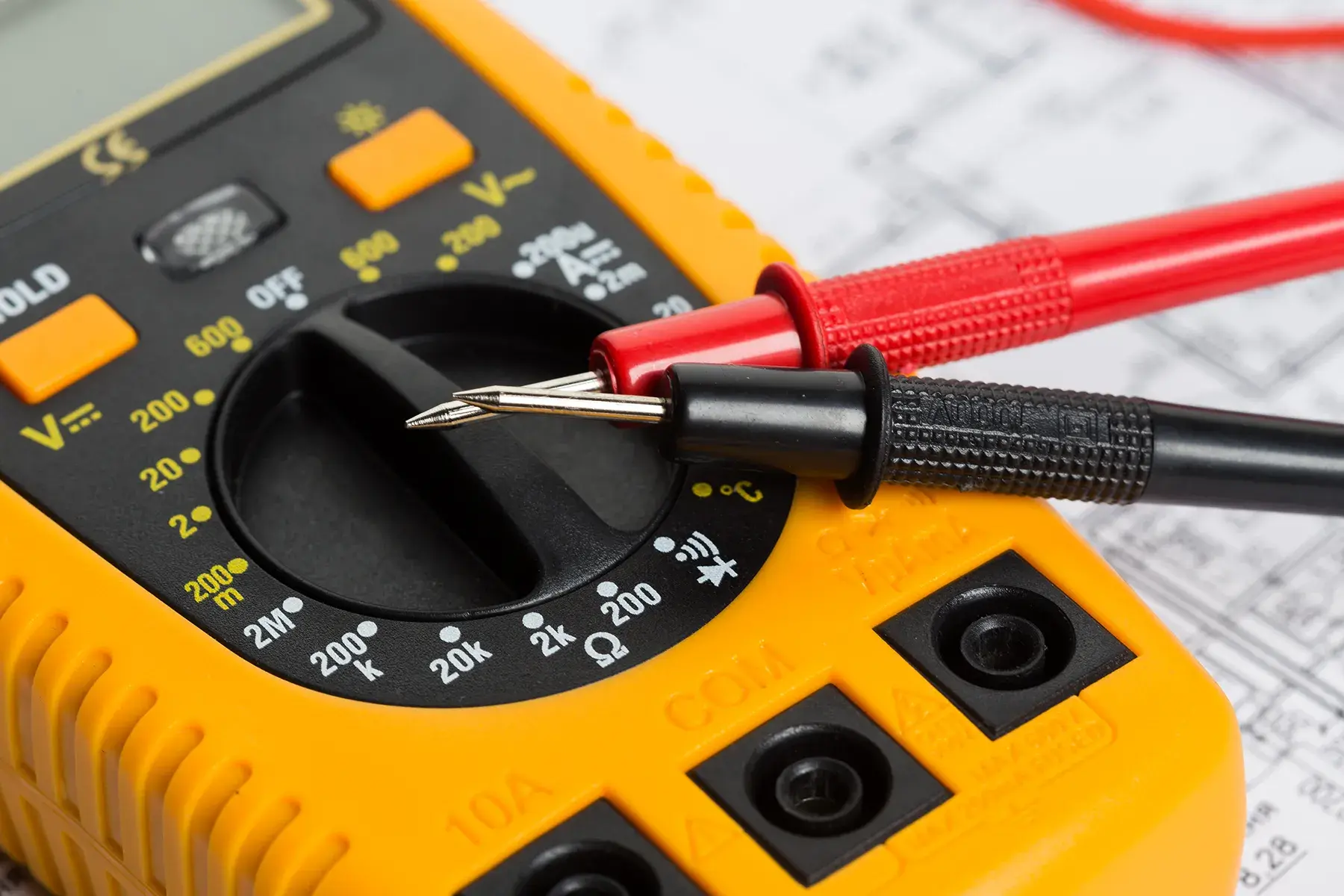
A digital multimeter that powers on, displays a stable reading, and passes a quick visual check can still be measuring incorrectly. Electrical test equipment rarely fails in an obvious way. It drifts quietly, and a unit that "seems fine" on the bench can be feeding inaccurate voltage, current, or resistance readings into a process for months before anyone notices.
For quality managers and technicians relying on multimeters, power supplies, oscilloscopes, and other electrical test instruments, understanding why drift happens beneath the surface is what separates a program that catches it early from one that only finds out during an audit or a failed product.
What Is Electrical Test Equipment Drift?
Drift is the gradual change in an instrument's measured values relative to true values, occurring even when the instrument appears to power on and function normally. Unlike a dead battery or a cracked display, drift produces no visible symptom. The instrument still reads out a number; that number is simply less accurate than it used to be.
This is what makes electrical drift particularly deceptive compared to more visibly mechanical equipment. A gauge with a bent needle or a scale with a broken platform announces its own failure. A multimeter that has drifted 0.3% out of tolerance looks, feels, and behaves exactly like one that hasn't.
What Causes Electrical Test Equipment to Drift?
Several mechanisms drive drift in electrical instruments, often independent of how carefully the equipment has been handled.
Component aging is the most fundamental cause. Voltage references, resistors, and other internal components that establish an instrument's measurement accuracy change their electrical characteristics slowly over time, simply as a function of the materials involved. A precision resistor's value shifts fractionally as it ages; a voltage reference's output shifts along with it. None of this is visible from the outside, and none of it requires misuse to occur.
Temperature sensitivity affects nearly every electronic measurement. Components have temperature coefficients that shift their behavior with ambient temperature, and an instrument calibrated at a stable lab temperature can read differently on a shop floor that swings 15 or 20 degrees across a shift. Equipment moved between environments, or used near heat-generating machinery, is especially exposed to this kind of drift.
Power cycling and warm-up behavior matter more than most technicians assume. Many precision instruments specify a warm-up period before readings stabilize, and repeated power cycling without allowing that warm-up time introduces measurement variability that can be mistaken for genuine drift, or can mask real drift underneath it.
Mechanical and connector wear introduces a different kind of error. Test leads, connectors, and internal relays degrade with repeated use, adding resistance or introducing intermittent contact that shows up as measurement error even when the instrument's core electronics are functioning correctly.
Humidity and contamination affect insulation resistance and can introduce leakage currents that are too small to notice in normal operation but large enough to shift a precision measurement outside its stated uncertainty.
Usage intensity and overrange events compound all of the above. An instrument used constantly, or one that has been subjected to a voltage or current spike beyond its rated range even briefly, tends to drift faster and less predictably than one used within its rated conditions.
Why Doesn't Drift Show Up Until It's a Problem?
Electrical instruments are built to keep functioning long after their accuracy has degraded. A multimeter with a drifted internal reference still displays a number, updates it in real time, and behaves exactly like a correctly calibrated unit from the operator's perspective. There's no built-in indicator that tells a technician the reading is now 0.5% off from true.
This is compounded by how electrical measurements get used downstream. A voltage reading that's slightly off might still fall within a pass/fail band on a given test, quietly shifting the margin without producing an outright failure that would prompt investigation. By the time drift is large enough to cause a visible failure, it may have been shaping data for a long time already.
What Does Drifted Electrical Equipment Put at Risk?
Undetected drift in electrical test equipment has consequences well beyond the instrument itself.
Product and process quality suffer first. Electrical test equipment is frequently used to verify that other products or systems meet their own electrical specifications. A drifted reference instrument can pass a product that's actually out of spec, or fail one that's actually fine, and neither error is visible without independent verification.
Safety-critical measurements carry higher stakes. Insulation resistance testers, ground continuity testers, and similar equipment used to verify electrical safety are directly tied to shock and fire risk. Drift in this category of equipment isn't just a data quality issue; it's a safety issue.
Compliance and audit exposure follow the same pattern as other measurement disciplines. A calibration record that only shows pass/fail, without as-found data showing how close an instrument was to its tolerance limit, can't demonstrate that drift was being tracked and managed rather than simply hoped against.
How Do You Catch Electrical Drift Before It Becomes a Problem?
As an ISO/IEC 17025 accredited company, we can't tell you what calibration interval is right for your equipment; that depends on your usage, criticality, and risk tolerance. What we can point to is the practice that catches drift regardless of the interval you land on.
As-found data is the single most useful piece of information a calibration program can collect. Recording how far an instrument had drifted before adjustment, at every calibration, turns a simple pass/fail record into a trend line that shows drift approaching a limit long before it crosses one.
Environmental consistency reduces one of the largest sources of drift. Keeping precision electrical instruments within their intended temperature and humidity range, and avoiding unnecessary movement between environments, slows the environmental contribution to drift meaningfully.
Respecting warm-up specifications prevents mistaking normal instrument behavior for drift, and prevents masking real drift underneath measurement noise.
Tracking overrange events and physical damage matters as much as tracking routine calibration due dates. An instrument known to have taken a voltage spike or been dropped should be flagged for verification rather than trusted until its next scheduled calibration.
Applying data-driven interval analysis, the same approach described in NCSLI RP-1, lets a program adjust calibration frequency for electrical instruments based on their actual drift history rather than a generic default.
What Should an Electrical Calibration Provider Verify?
A provider calibrating electrical test equipment should test across the instrument's full functional range and function set (voltage, current, resistance, frequency, and any other measurement type the instrument supports), not just at one convenient point. Look for a provider that documents full as-found and as-left data at each test point, reports measurement uncertainty, and maintains traceability to NIST or an equivalent national metrology institute.
Confirming that a provider's accreditation scope specifically covers the electrical ranges and instrument types in use, including any specialized equipment like insulation resistance testers or RF test gear, is worth doing before committing to a provider, since accreditation is granted scope by scope rather than as a blanket credential.
Invisible Drift Requires a Visible Process
Electrical test equipment drift is largely invisible by nature, which means catching it can't depend on an instrument announcing that something's wrong. It depends on a calibration program built around as-found data, appropriate intervals, and environmental discipline, rather than trusting an instrument because it still "seems fine."
At Accredited Labs, our nationwide network performs electrical calibration under ISO/IEC 17025 accredited practices, with full as-found and as-left data across the instrument's functional range to help you catch drift before it becomes a bigger problem.