

 Joe Moser - CEO
What to Look For in a Temperature Calibration Provider
Temperature measurement drives decisions across pharmaceuticals, food production, industrial processing, and scientific research, and the instrument making that measurement is only as trustworthy as the calibration behind it. Choosing a temperature calibration provider on price alone is one of the more common ways a quality program ends up with certificates that don't hold up under scrutiny.
For quality managers, lab managers, and process engineers responsible for selecting a calibration partner, this article covers what professional temperature calibration actually involves, what to look for in a provider, and why accreditation is the detail that separates a defensible calibration program from one that only looks like one.
What Does Professional Temperature Calibration Involve?
Professional temperature calibration verifies and adjusts instruments across their full measurement range and operating conditions, comparing each device against certified reference temperature standards with known, traceable values.
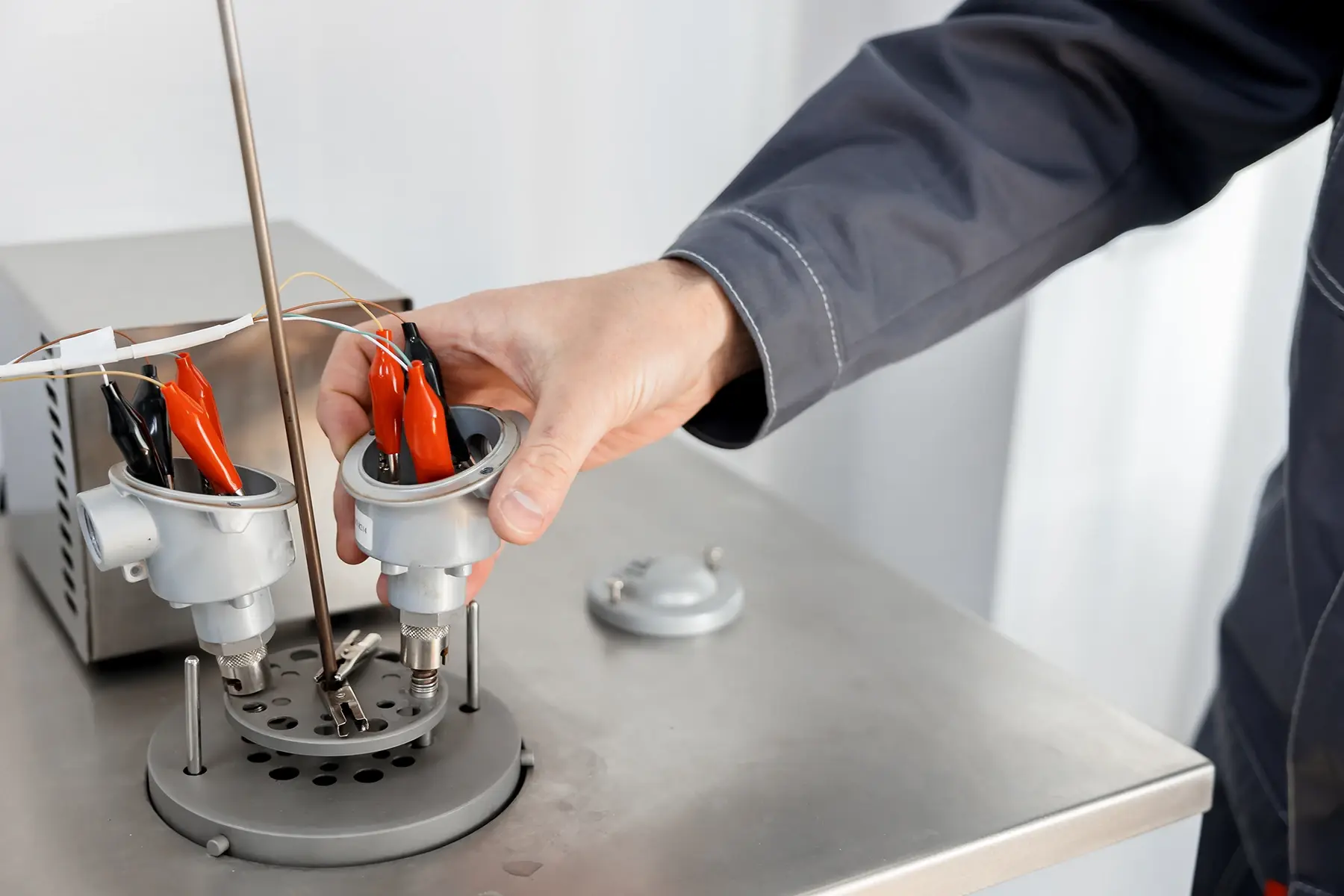
A qualified provider uses precisely controlled temperature sources, such as dry-block calibrators or liquid baths, along with calibrated reference thermometers to evaluate the instrument under test. Results are documented as-found before any adjustment, then as-left once the instrument is confirmed to perform within tolerance. If an instrument can't be brought back within its required accuracy, a professional provider reports the data clearly enough to support a repair, replacement, or corrective action decision.
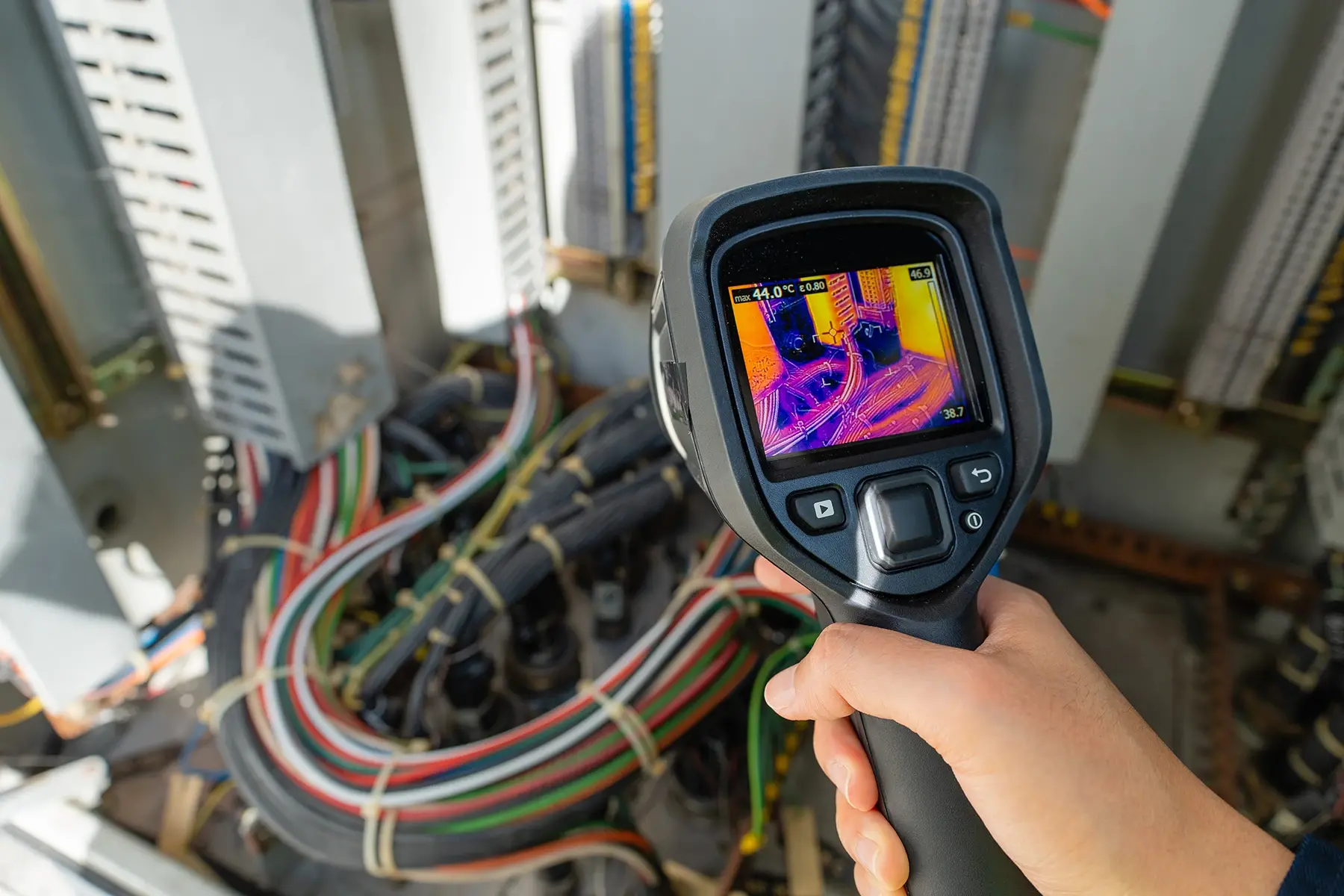
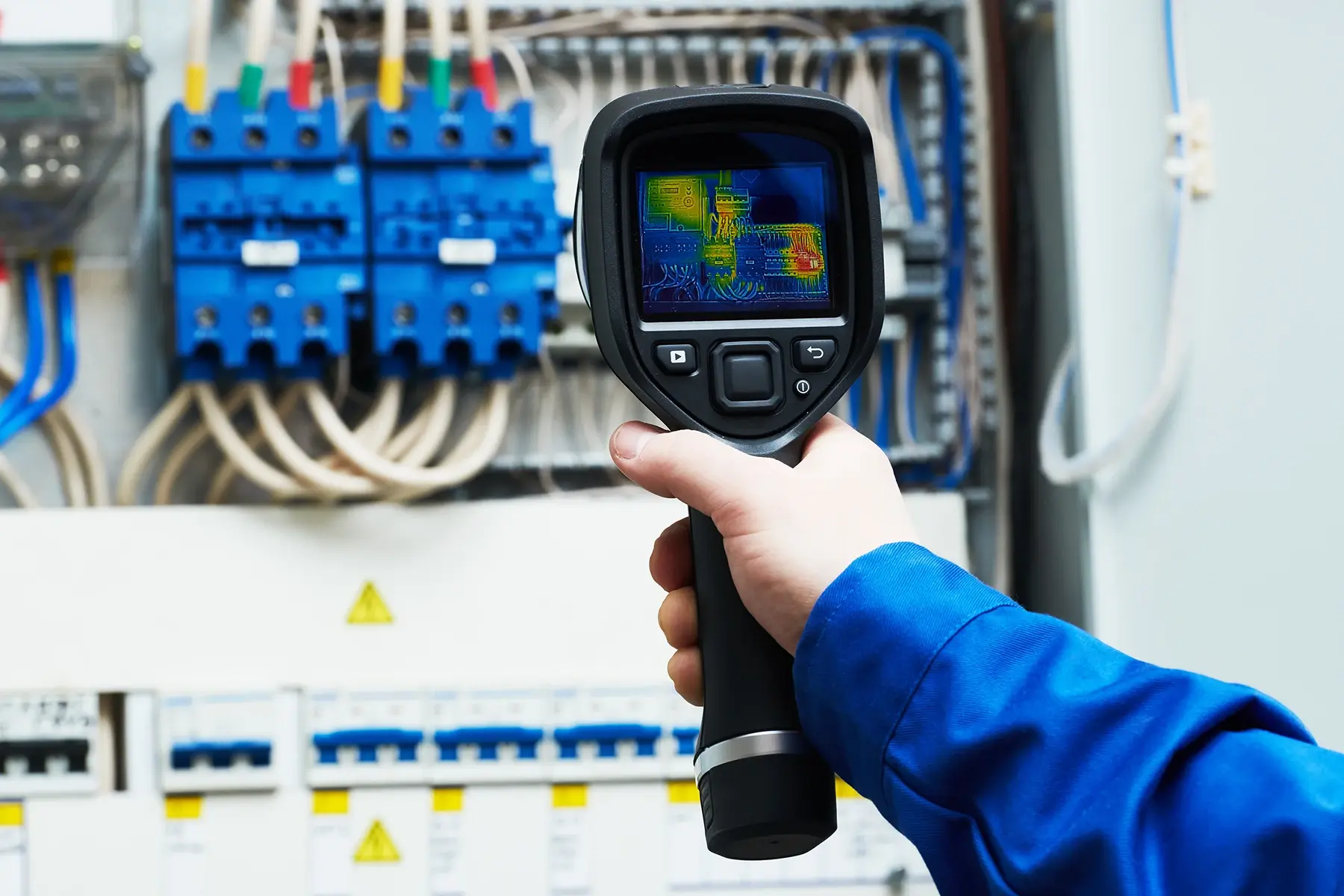
This applies across a wide range of instrument types, including thermocouples, RTDs, thermistors, digital thermometers, temperature transmitters, infrared thermometers and thermal imaging equipment, data loggers, and temperature controllers. Each instrument type has its own calibration considerations, and a provider's ability to calibrate across that full range, not just the easy instruments, is itself a sign of real capability.
What Should You Look for in a Temperature Calibration Provider?
Choosing a temperature calibration provider comes down to a handful of factors that matter more than turnaround time or price alone.
Traceability to a national temperature standard is the foundation. In the United States, that means traceability to ITS-90, the International Temperature Scale of 1990, which defines how temperature is measured and reported in scientific and industrial metrology. A provider whose reference standards aren't traceable to ITS-90 can't back up its own certificates with anything more than an internal claim.
Coverage of your actual instrument types and ranges matters just as much. A provider with a narrow accreditation scope might handle a digital thermometer well but lack the reference standards or technical competence to properly calibrate an infrared thermometer or a high-temperature process sensor. Ask specifically whether the provider's scope covers your instrument types and the temperature ranges you actually operate in, not just temperature calibration broadly.
Documentation quality is where a lot of providers fall short without customers noticing until an audit. A calibration certificate should do more than state pass or fail. It should show measurement results with associated uncertainty, the reference standard used, and a clear traceability statement.
On-site or in-situ capability can matter operationally. Portable dry-block calibrators and liquid baths can often be brought to a sensor's installed location, avoiding the downtime and reinstallation risk that comes with removing a sensor for lab calibration. Not every provider offers this, and not every instrument is a good candidate for it, but it's worth asking about.
Why Does Accreditation Matter for Temperature Calibration?
Accreditation matters because it's the mechanism that turns "we do good calibration work" from a claim into something independently verified.
ISO/IEC 17025 is the international standard that governs the competence of testing and calibration laboratories. A laboratory accredited to ISO/IEC 17025 has had its technical competence, equipment traceability, and quality management system independently evaluated by trained assessors against that standard. That evaluation covers things a customer can't easily verify on their own: whether the lab's reference standards are properly maintained and traceable, whether its staff are competent to perform the specific calibrations in its scope, and whether its documentation practices would hold up under scrutiny.
Accreditation bodies are also required to operate with impartiality, free from the commercial pressure to simply approve every lab that pays for an assessment. That independence is part of what makes an accredited calibration certificate meaningfully different from a certificate issued by an unaccredited provider using its own internal standards. ISO/IEC 17025 accreditation isn't a universal legal requirement, but it is the most reliable way to demonstrate that a temperature calibration provider's results will hold up under a customer audit or regulatory review.
Who Accredits Calibration Laboratories in the United States?
In the United States, ISO/IEC 17025 accreditation for calibration laboratories is most commonly issued by A2LA (the American Association for Laboratory Accreditation) or ANAB (the ANSI National Accreditation Board), where applicable.
A2LA, established in 1978, is an independent, nonprofit accreditation body with thousands of accredited organizations across the country. ANAB, a subsidiary of the American National Standards Institute, is the largest multi-disciplinary accreditation body in the western hemisphere. Both are signatories to the International Laboratory Accreditation Cooperation (ILAC) Mutual Recognition Arrangement, which means a calibration certificate issued under either body's accreditation is recognized as meeting the same international standard, regardless of which one performed the assessment.
When evaluating a provider, it's worth confirming which body accredits them and, more specifically, whether that accreditation scope actually covers temperature calibration for your instrument types. Accreditation is granted scope by scope, not as a blanket credential.
What Should a Compliant Calibration Certificate Include?
A calibration certificate is the document that has to hold up if anyone ever questions your measurements, so knowing what belongs on it helps you evaluate a provider's documentation before you commit to one. A compliant certificate should include:
- Unique identification of the calibrated item, including serial number
- Calibration date and next due date
- Environmental conditions recorded during calibration
- Measurement results with associated uncertainty, not a bare pass/fail (where required)
- A traceability statement referencing NIST or a recognized national metrology institute
- Name and accreditation body of the calibrating laboratory (such as A2LA or ANAB, where applicable)
- Accreditation scope that explicitly covers the type and range of the instrument calibrated, where required
- Does your accreditation scope specifically cover the instrument types and temperature ranges I need calibrated?
- What reference standards do you use, and can you demonstrate traceability to ITS-90 or an equivalent national standard?
- What does a sample calibration certificate look like, and does it include stated uncertainty and a traceability statement?
- Do you offer on-site or in-situ calibration for sensors that are difficult to remove from service?
- What is your turnaround time, and how do you handle instruments that fail calibration?
If a provider's sample certificate is missing several of these elements, that's a reasonable signal to ask more questions before moving forward.
What Questions Should You Ask Before Choosing a Provider?
A short conversation before you commit to a provider can save a much longer conversation with an auditor later. Before selecting a temperature calibration provider, ask:
A nationwide accredited network offers a real advantage here, giving organizations with multiple sites consistent calibration quality and documentation practices, rather than relying on a single local provider with a narrower scope.
How Often Should Temperature Instruments Be Calibrated?
As an ISO/IEC 17025 accredited company, we can't recommend calibration intervals, and your interval should be based on your own associated risks and requirements, but we can draw on decades of experience to show you what others in similar operations tend to do.
Many organizations calibrate temperature instruments annually as a starting point, with more frequent calibration for instruments tied to critical process setpoints, such as sterilization temperatures in pharmaceutical manufacturing or control limits in food safety programs. As-found data from previous calibrations is the best guide for adjusting that interval over time.
Choosing the Right Provider Protects Everything Downstream of the Measurement
Every product release, safety decision, and compliance record that depends on a temperature reading is only as reliable as the calibration behind the instrument that produced it. Looking past price to accreditation, traceability, and documentation is what keeps that reliability intact.
At Accredited Labs, our nationwide network performs temperature calibration under ISO/IEC 17025 accredited practices, with documentation built to hold up under audit.
→ Get A Temperature Calibration Quote