

6 min read
Beyond the Audit: The Hidden Costs of Skipping Dimensional Calibration
 Joe Moser - CEO
Updated on June 24, 2026
Joe Moser - CEO
Updated on June 24, 2026
Ask most manufacturers why they calibrate, and the answer comes quickly: to pass audits. That's not wrong — audit readiness is a real requirement. The stakes are visible and the consequences are understood.
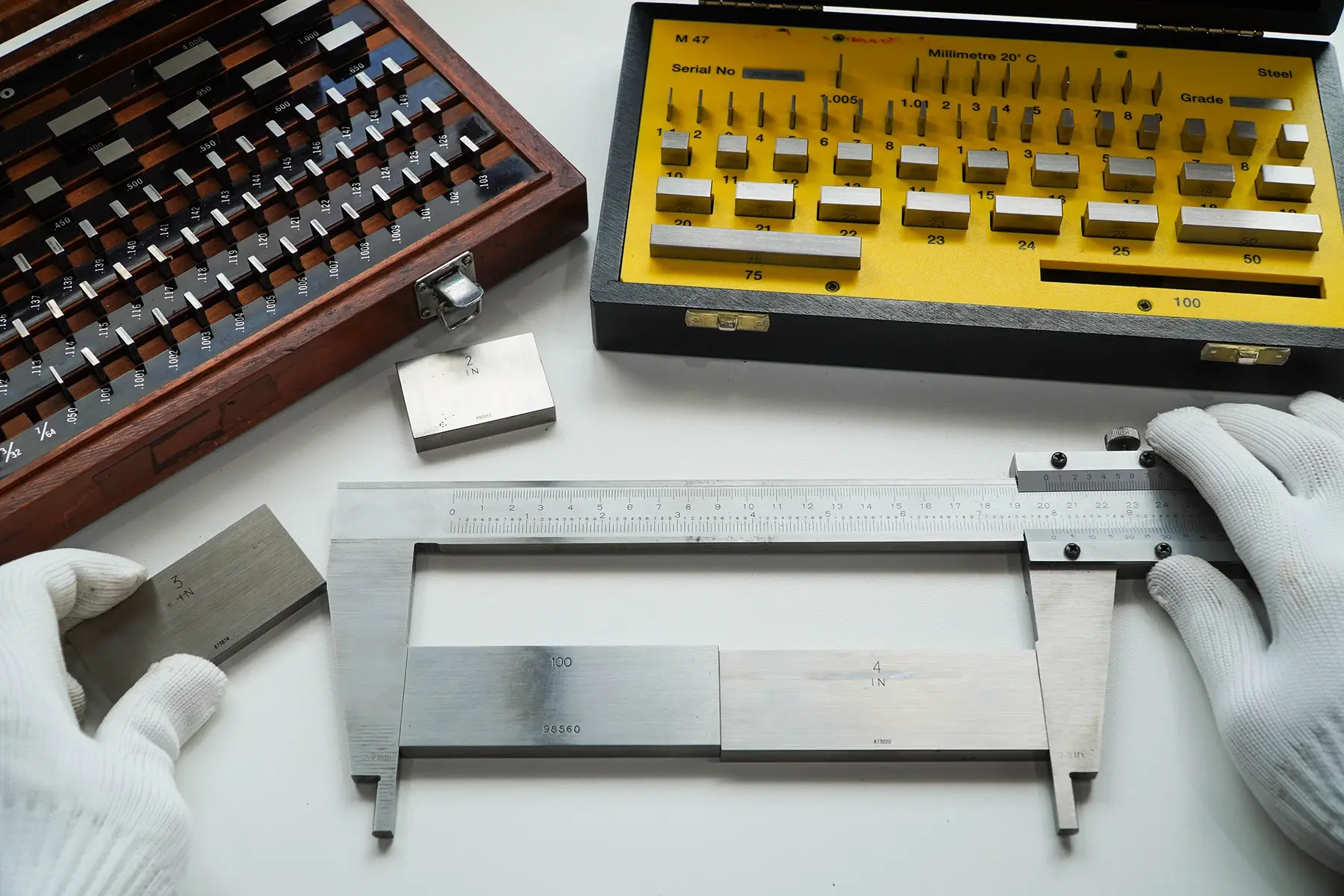
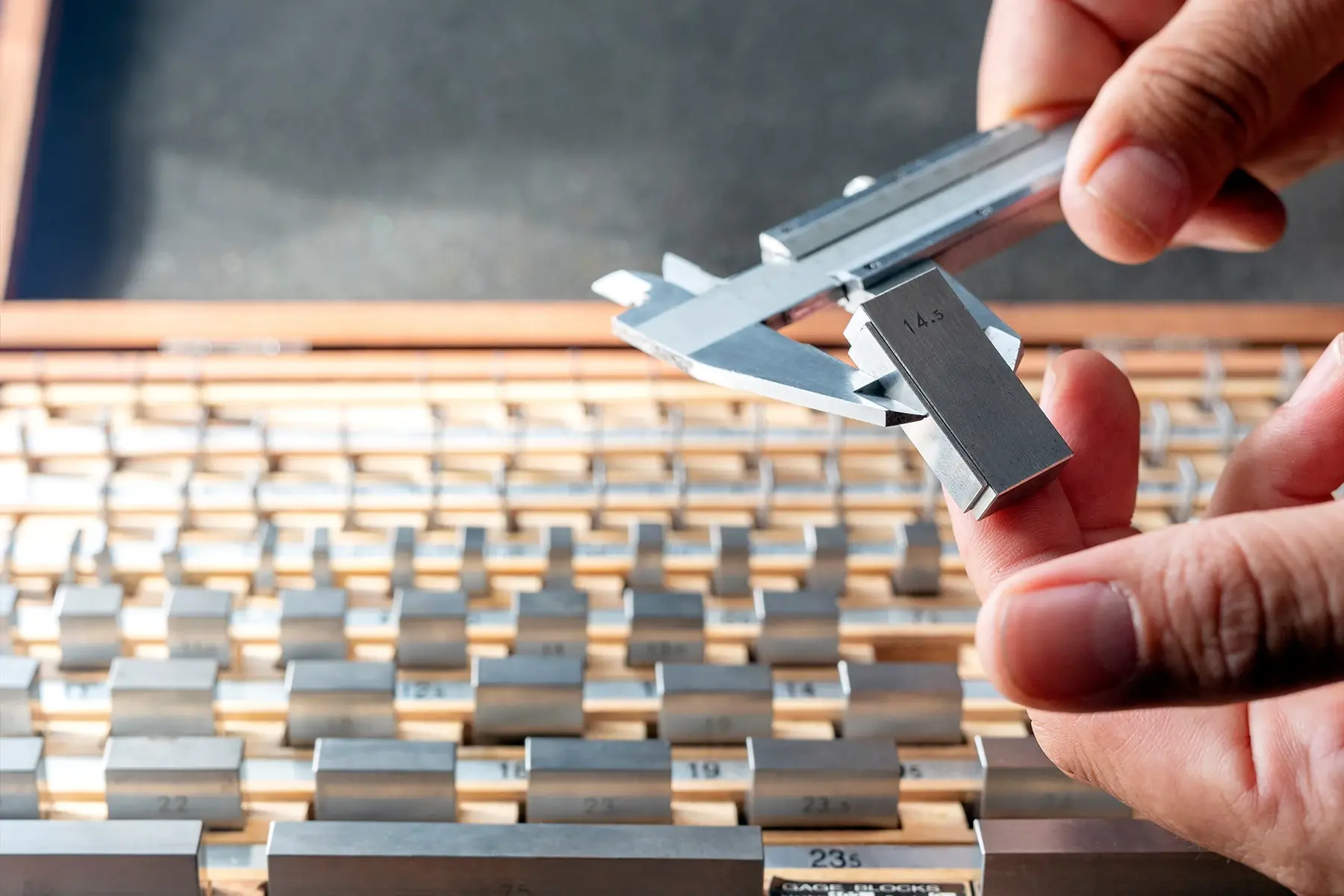
But the costs of inadequate calibration that never appear on an audit finding — those are the ones that quietly erode margins, consume engineering hours, strain customer relationships, and create liability you may not even know you’re carrying. And they apply across every dimensional tool in your operation: calipers, micrometers, height gages, bore gages, CMMs, optical comparators, and everything in between.
Cost #1: Scrap and Rework from False Accepts
A false accept happens when an out-of-calibration dimensional tool reads a non-conforming part as good. It might be a caliper measuring a shaft diameter, a micrometer checking a thread, or a height gage verifying a critical surface — the tool says the part is within spec. It isn’t. The part passes inspection and moves to the next operation, or ships to the customer.
The damage multiplies fast. If a micrometer or caliper drifted out of calibration two weeks ago and has been in continuous use since, every part measured in that window is suspect. Depending on the production volume, that could be dozens, hundreds, or thousands of parts — each requiring re-inspection, rework if possible, or scrapping if not.
Consider a simple example: a machined component with a 30-minute cycle time, running two shifts. An out-of-cal gage goes undetected for five days. That's potentially 160+ parts. At a material and labor cost of $75 each, you're looking at $12,000 in scrap and rework exposure — before accounting for the cost of re-inspection, production disruption, or any parts that already shipped.
Scheduled calibration with defined intervals limits that exposure window. The shorter the interval, the smaller the potential problem. This is why calibration frequency should be tied to the consequences of an out-of-spec event — not just to what seems reasonable on a calendar.
Cost #2: Good Parts Rejected (False Rejects)
The inverse problem gets less attention, but it’s just as costly. An out-of-calibration tool — whether it’s a digital caliper reading consistently high, a micrometer with a worn anvil, or a bore gage that’s shifted out of zero — will reject parts that are actually within specification. The part is good. The instrument says otherwise.
What follows is a chain of unnecessary work: an operator flags the part, a technician pulls it for review, an engineer gets involved to investigate the apparent process shift that isn't actually happening. If the part can be reworked, it goes back through the process. If it can't, it's scrapped — a perfectly conforming part thrown away because of a measurement error.
Beyond the direct material cost, false rejects compress production schedules. Downstream operations wait for parts that should already be available. Delivery commitments slip. The cost of explaining a late shipment to a customer is harder to quantify than material cost — but it's real.
Cost #3: Production Bottlenecks and Line Stoppages
A critical dimensional tool that fails during production — a CMM that goes down, a micrometer set that’s pulled because readings can’t be trusted, a height gage found out of calibration mid-run — doesn’t just create a calibration problem. It creates a production problem.
If there’s no qualified spare available, the line stops. Rush calibration costs a premium — often 25–50% more than scheduled service, and that’s assuming a provider can respond quickly. This is especially acute for larger instruments like CMMs or optical comparators, where a loaner isn’t a practical option. Waiting for a calibration technician to arrive means lost production time that cannot be recovered. If you’re running near capacity, that time translates directly to missed output.
The downstream effects compound this. Operations waiting on parts from the stopped line begin to idle. Buffer inventory gets consumed. If the stoppage runs long enough, customer shipments are affected — and the cost of a disruption spreads well beyond the original calibration failure.
Scheduled calibration with adequate lead time eliminates this scenario. Calipers, micrometers, and other hand tools are out of service predictably, with substitutes staged in advance. CMM and larger instrument downtime is planned around production windows. There’s no emergency, no premium, and no line stoppage.
Cost #4: Customer Returns and Warranty Claims
When a false accept makes it through inspection and ships to a customer, the costs that follow are among the most expensive a manufacturer will encounter.
The direct costs are straightforward: return shipping, replacement parts, expedited delivery to recover the schedule. But those are usually the smaller number. In many supplier agreements, a customer return triggers a formal corrective action requirement, an 8D investigation, and potentially an on-site audit. The administrative burden alone can run tens of thousands of dollars before any root cause is identified.
Warranty claims add another layer. Depending on the failure mode and the product, warranty exposure can extend years beyond the original shipment date. If the non-conforming part contributed to a product failure in the field, that exposure grows further.
The cost that rarely appears on a balance sheet — but is often the most consequential — is lost future business. Customers who experience quality escapes don't forget. They qualify backup suppliers. They reduce order volumes. Some don't come back at all. A single calibration-related escape can cost more in lost revenue over five years than the organization's entire calibration budget.
Cost #5: Engineering Time Investigating Phantom Issues
Bad measurement data creates phantom problems — variation that appears in the data but doesn't exist in the process. Engineers respond to what the data says. If the data is wrong, the response is wrong.
Process adjustments get made to fix problems that aren’t there. Tooling gets changed. Parameters get modified. Statistical process control charts show capability issues that are actually measurement system issues. Teams spend hours — sometimes days — investigating a process shift that turns out to be a drifted caliper, a micrometer that’s dropped and never re-checked, or a CMM probe that’s worn beyond its qualified range.
Engineer and senior technician time is among the most expensive labor in a manufacturing operation. At fully loaded rates, a week of misallocated engineering effort investigating a measurement-driven phantom issue can easily exceed $5,000–$10,000. Multiply that by the number of incidents that occur annually, and the cost is significant.
There's also an opportunity cost dimension: every hour spent chasing a measurement artifact is an hour not spent on real process improvement, capacity expansion, or cost reduction. The best engineering teams are also the most expensive to waste.
Cost #6: Inconsistent Supplier Quality Issues
Dimensional calibration failures don’t only affect outgoing quality — they affect incoming inspection as well. Receiving inspection tools that are out of calibration — calipers used to spot-check incoming dimensions, micrometers verifying shaft tolerances, pin gages checking hole sizes — create exactly the same false accept and false reject problems on the supply chain side.
When receiving inspection accepts bad supplier parts, those parts enter the production flow and the downstream problems begin — all the costs described above, with the added complexity of a supplier dispute layered on top. Determining whether the non-conformance originated with the supplier or was introduced in-house becomes a contentious investigation when measurement systems on both sides can't be trusted.
When receiving inspection rejects good supplier parts, the supplier receives a return they don't believe is justified. They re-inspect on their end and find conforming parts. The back-and-forth dispute resolution process — calls, root cause analyses, corrective action requests, measurement correlation exercises — is expensive for both parties and damages a relationship that took time to build.
Calibrated receiving inspection instruments establish a reliable basis for those conversations. When a rejection is issued — whether it’s a caliper measurement, a micrometer reading, or a CMM report — both parties can trust the measurement. That’s worth a lot more than the cost of a calibration.
Cost #7: Regulatory and Legal Exposure
For manufacturers in regulated industries — medical devices, aerospace, automotive, and pharmaceuticals to name a few — the regulatory consequences of inadequate calibration extend well beyond a finding on an audit report.
In FDA-regulated environments, a calibration failure that contributed to a product non-conformance can trigger a CAPA, a supplier audit, or in serious cases, a warning letter or consent decree. The cost of responding to regulatory action dwarfs the cost of the calibration program that would have prevented it.
In product liability contexts, calibration records matter. If a product failure results in a claim and it can be established that the manufacturer's measurement systems were not properly maintained, the defense becomes substantially more difficult. Legal fees, settlement costs, and the reputational damage from public proceedings create an exposure profile that no calibration budget can exceed.
Insurance carriers are also paying attention. Some manufacturers have found that gaps in calibration documentation affect coverage terms or premiums. A well-documented calibration program is evidence of a quality management system that takes measurement integrity seriously — and insurers recognize that.
The ROI of a Proper Calibration Program
When the full cost picture is on the table, the return on investment calculation for a well-structured calibration program becomes straightforward.
Organizations that shift from reactive to proactive calibration management consistently report:
• Reduced scrap rates as measurement confidence improves
• Fewer engineering investigations driven by measurement variation
• Faster audit cycles due to complete, organized calibration records
• Payback periods measured in months, not years
Building a Cost-Effective Calibration Program
An effective calibration program doesn't treat every instrument the same. A risk-based approach allocates calibration resources based on the consequences of an out-of-spec event, not simply on what sounds reasonable.
Critical gages — those used on features with tight tolerances, in high-volume applications, or on dimensions that directly affect safety or function — warrant shorter intervals and tighter accuracy requirements. Supporting instruments with lower consequence failures can be calibrated less frequently without meaningful risk. This kind of tiering keeps costs manageable while concentrating protection where it matters most.
The difference between preventive and reactive calibration is also a cost difference. Scheduled calibration is predictable. Gages are batched efficiently, technicians plan their time, and spares are available. Reactive calibration — responding to a suspected or confirmed failure — carries premium costs and unpredictable timing.
The right calibration partner matters. The Accredited Labs network of branches provides ISO/IEC 17025 accredited dimensional calibration services across industries and instrument types — with the documentation, traceability, and technical expertise to support quality programs that actually protect your operation. Contact us to build your calibration program, so you're always audit-ready while avoiding hidden costs.