


4 min read
Humidity Calibration Explained: How RH Accuracy Protects Compliance
 Joe Moser - CEO
Published
Joe Moser - CEO
Published
What Is Humidity Calibration?
Humidity calibration is the process of verifying that an instrument measuring relative humidity (RH), dew point, or moisture content reads accurately against a traceable reference standard. As with any calibration discipline, the goal is to establish a documented, unbroken measurement chain that links your instrument's output back to national humidity standards.
For quality managers and lab managers, this isn't a formality. Humidity governs product stability, contamination risk, and process control in industries where a few percentage points of RH can mean the difference between a compliant batch and a costly failure. When a humidity sensor drifts out of tolerance, every reading it produced since its last calibration becomes questionable, along with every decision made based on that data.
Humidity measurement plays a critical role in pharmaceutical manufacturing, electronics production, food processing, cleanroom environments, materials testing, and environmental monitoring. In each case, the reliability of the result depends entirely on the calibration status of the instrument doing the measuring.
How Humidity Calibration Works
Humidity calibration compares an instrument's reading against a reference standard of known, traceable accuracy under controlled conditions. That reference standard carries its own calibration certificate traceable to national metrology standards, forming the chain required by ISO/IEC 17025 and most quality management systems.
The general process follows a familiar pattern:
The instrument is documented. Make, model, serial number, calibration history, and physical condition are recorded before any testing begins.
As-found data is collected. Readings are taken across the instrument's operating range before any adjustment is made. This step matters because as-found data tells you how the instrument was actually performing during the period since its last calibration, which is the data that supports or undermines every measurement taken during that window.
The instrument is evaluated against tolerance. If readings fall outside the manufacturer's or application's specified limits, technicians adjust, repair, or remove the instrument from service.
As-left data is recorded. Post-adjustment readings confirm the instrument now performs within its required accuracy range.
A calibration certificate is issued. This documents the reference standards used, the test points evaluated, measurement uncertainty, and the traceability chain back to national standards.
Technicians generate known humidity conditions using precision humidity generators, saturated salt solutions at fixed reference points, or chilled-mirror hygrometers used as transfer standards. Because RH is temperature dependent, a properly controlled thermal environment is just as important to the process as the humidity source itself. Multi-point testing across the instrument's working range is standard practice, since a sensor can be accurate at one humidity level and drift noticeably at another.
Types of Instruments That Require Humidity Calibration
Humidity calibration covers a wide range of measurement technologies, each with its own sensitivities and calibration considerations:
Digital humidity transmitters. Electronic sensors that feed analog or digital signals into process control and building automation systems. Calibration addresses the sensor element, signal processing, and output accuracy.
Portable humidity meters. Handheld instruments used for spot checks, facility surveys, and field verification, calibrated across their full measurement range and under varying environmental conditions.
Hygrometers and psychrometers. Traditional wet-bulb/dry-bulb and mechanical instruments that require calibration procedures specific to their measurement principle.
Data loggers with humidity sensors. Automated monitoring devices used for validation studies and continuous compliance documentation, where both measurement accuracy and timing precision matter.
Dew point meters. Instruments critical to compressed air quality monitoring and industrial process control, where dew point is the parameter that determines product or process risk.
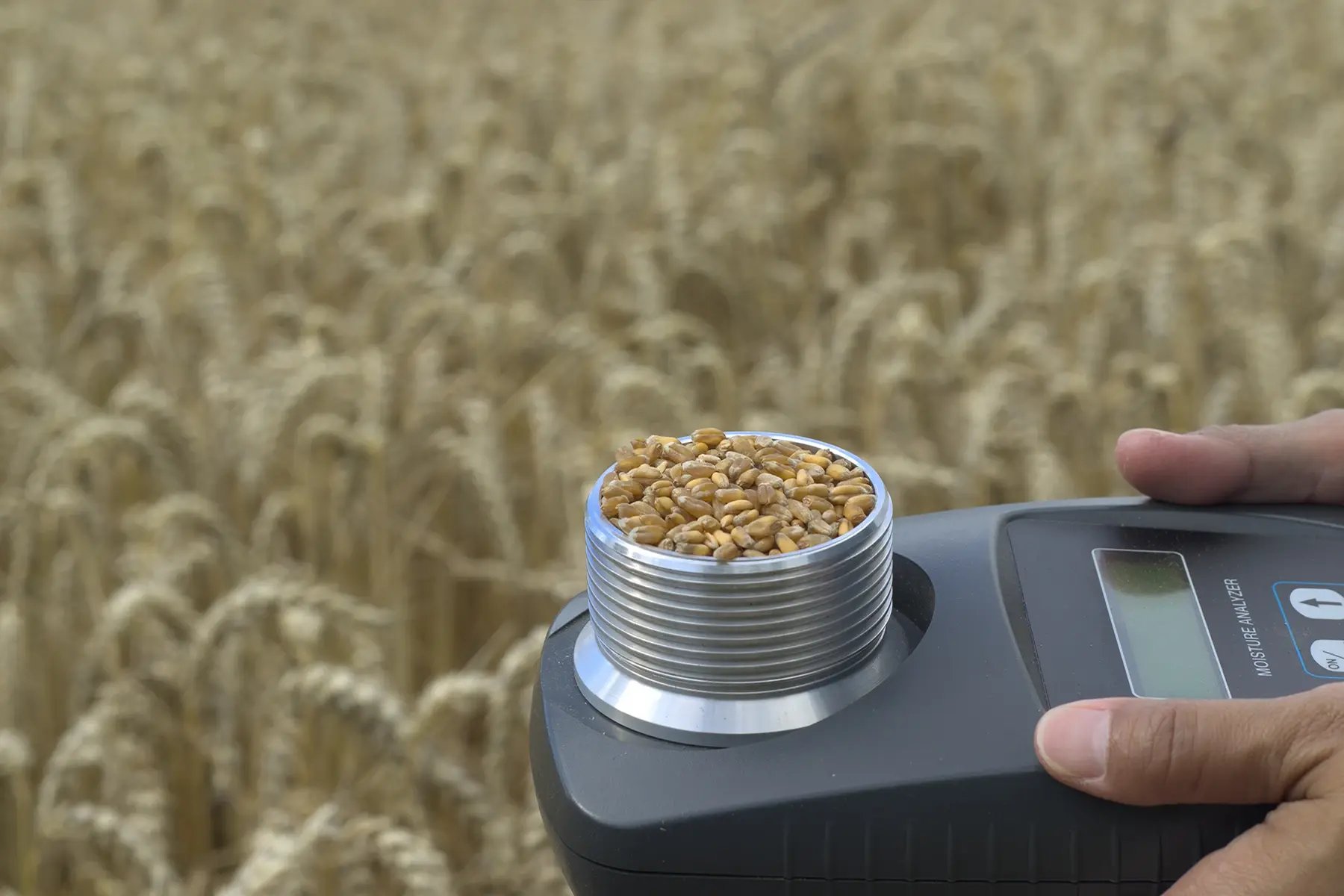
Moisture analyzers. Laboratory instruments measuring moisture content in raw materials and finished products, requiring calibration approaches that account for sample handling as well as sensor response.
Environmental chamber controllers. Systems used in stability testing and controlled storage that need calibration of both the measurement and control functions.
HVAC and cleanroom monitoring sensors. Building and facility sensors used for climate control, indoor air quality, and contamination control in regulated environments.
Why Sensors Drift, and Why It Matters
Capacitive and resistive humidity sensors, the most common types in industrial and lab use, are inherently susceptible to drift. Airborne chemical exposure, particulate contamination, and prolonged exposure to extreme humidity levels can all shift a sensor's response over time. Temperature cross-sensitivity and sensor hysteresis add further complexity, since a sensor's accuracy at one temperature or humidity band doesn't guarantee accuracy at another.
Calibration compares sensor output against a traceable reference and documents any deviation, allowing technicians to adjust the instrument or apply a correction factor so readings stay within tolerance. Skipping this step doesn't just risk a bad reading. It risks an entire body of data collected during the drift period.
Where Accurate RH Measurement Protects Quality and Compliance
Pharmaceutical and biotech manufacturing. Humidity control is directly tied to product stability, microbial contamination risk, and regulatory compliance. Many facilities operate within tightly controlled humidity ranges specified in validated processes. An inaccurate reading can push a controlled environment out of specification without anyone realizing it, which can compromise product quality or surface as a finding during an FDA or EMA inspection.
Electronics manufacturing. Static discharge risk and material sensitivity make RH control essential on production floors, particularly for moisture-sensitive components.
Food processing. Humidity affects shelf life, texture, and microbial growth risk, making accurate environmental monitoring part of food safety programs.
Cleanrooms and controlled environments. Humidity monitoring in pharmaceutical cleanrooms and electronics manufacturing must meet strict protocols for contamination control, and the monitoring equipment itself has to be trustworthy to support those protocols.
Materials and construction testing. Moisture content readings feed directly into test results and specification decisions, so instrument accuracy has downstream effects on data validity.
Signs Your Humidity Instruments May Need Attention Now
Don't wait for a scheduled calibration if you're seeing:
- Environmental monitoring readings that seem inconsistent with known conditions or don't match a secondary instrument
- A sensor that has been exposed to condensation, chemical fumes, or an extreme humidity event
- Data logger readings that drift over the course of a monitoring cycle
- Calibration certificates that are expired or approaching expiration
- An upcoming audit or customer quality review requiring current calibration documentation
- Out-of-specification environmental excursions that can't be explained by known process changes
Calibration Intervals for Humidity Instruments
The right interval depends on the instrument, its role, and the demands of the application, but some general guidance applies. Instruments in regulated environments, such as pharmaceutical stability chambers or cleanroom monitoring systems, typically follow annual calibration at minimum, with more frequent verification for high-consequence applications. Field instruments exposed to harsh conditions, chemical contamination, or frequent handling often need shorter intervals.
Your own calibration history is the best guide. If as-found data consistently shows an instrument arriving in tolerance with margin to spare, that's evidence to support extending the interval. If as-found data shows frequent out-of-tolerance results, the interval should be shortened and the root cause investigated.
Work With a Calibration Provider Who Understands Humidity Measurement
Humidity calibration requires more than a certificate. It requires a provider who understands the sensor technology, the standards, and the operating environment your instruments live in, and who can match calibration scope to what your quality program actually requires.
Accredited Labs provides humidity calibration services through a national network of ISO/IEC 17025 accredited laboratories, with on-site and mobile calibration capabilities for instruments that can't be pulled from service.