

4 min read
Why NIST Traceable Standards Matter in Gage Block Calibration
 Joe Moser - CEO
Published
Updated
Joe Moser - CEO
Published
Updated
What Is NIST-Traceable Gage Block Calibration?
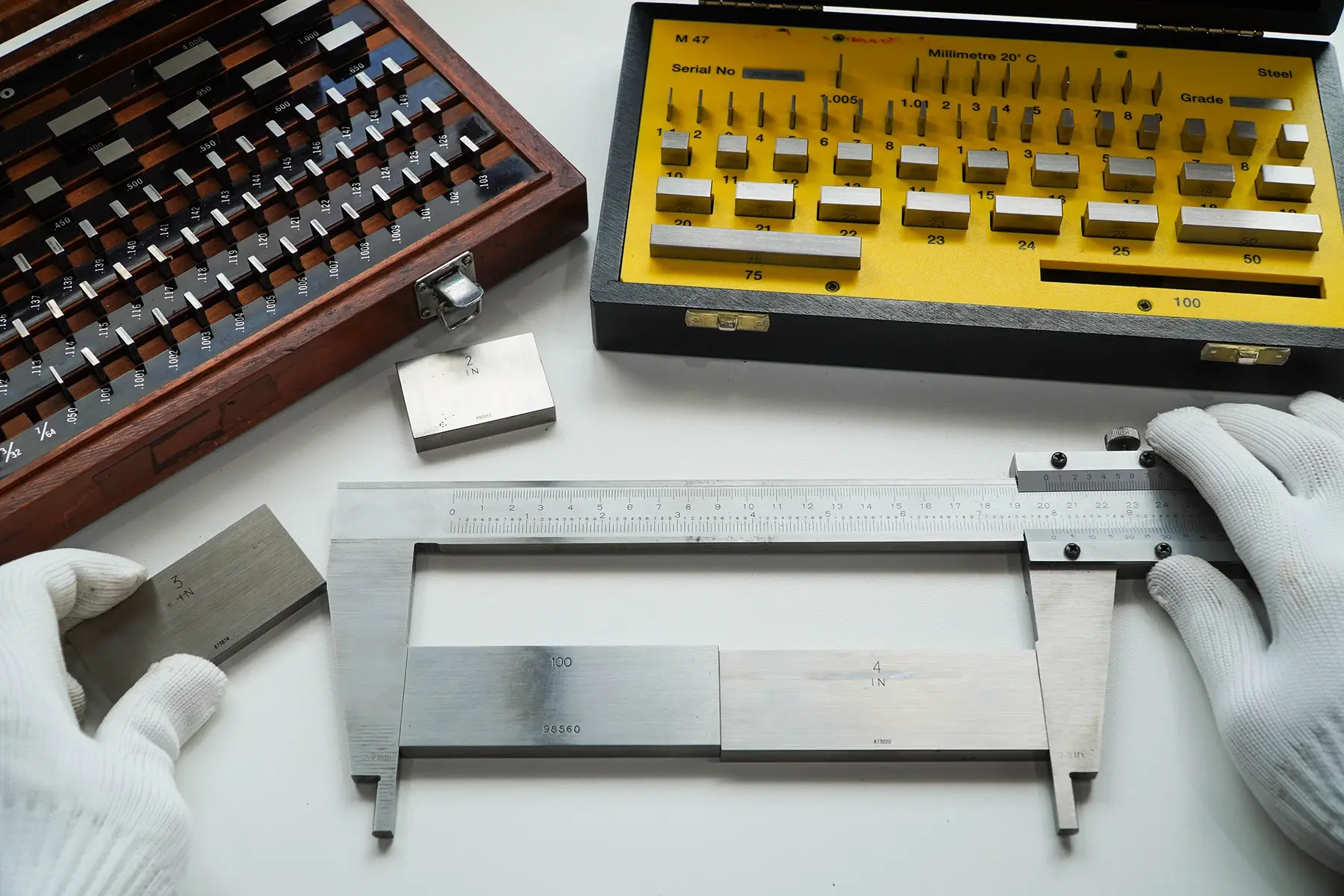
NIST-traceable gage block calibration is the process of verifying and documenting that gage block dimensions meet established standards through an unbroken chain of measurements linked to the National Institute of Standards and Technology (NIST). This traceability chain begins with NIST primary standards, flows through ISO/IEC 17025 accredited calibration laboratories, and extends to the gage blocks and measuring instruments used on your shop floor.
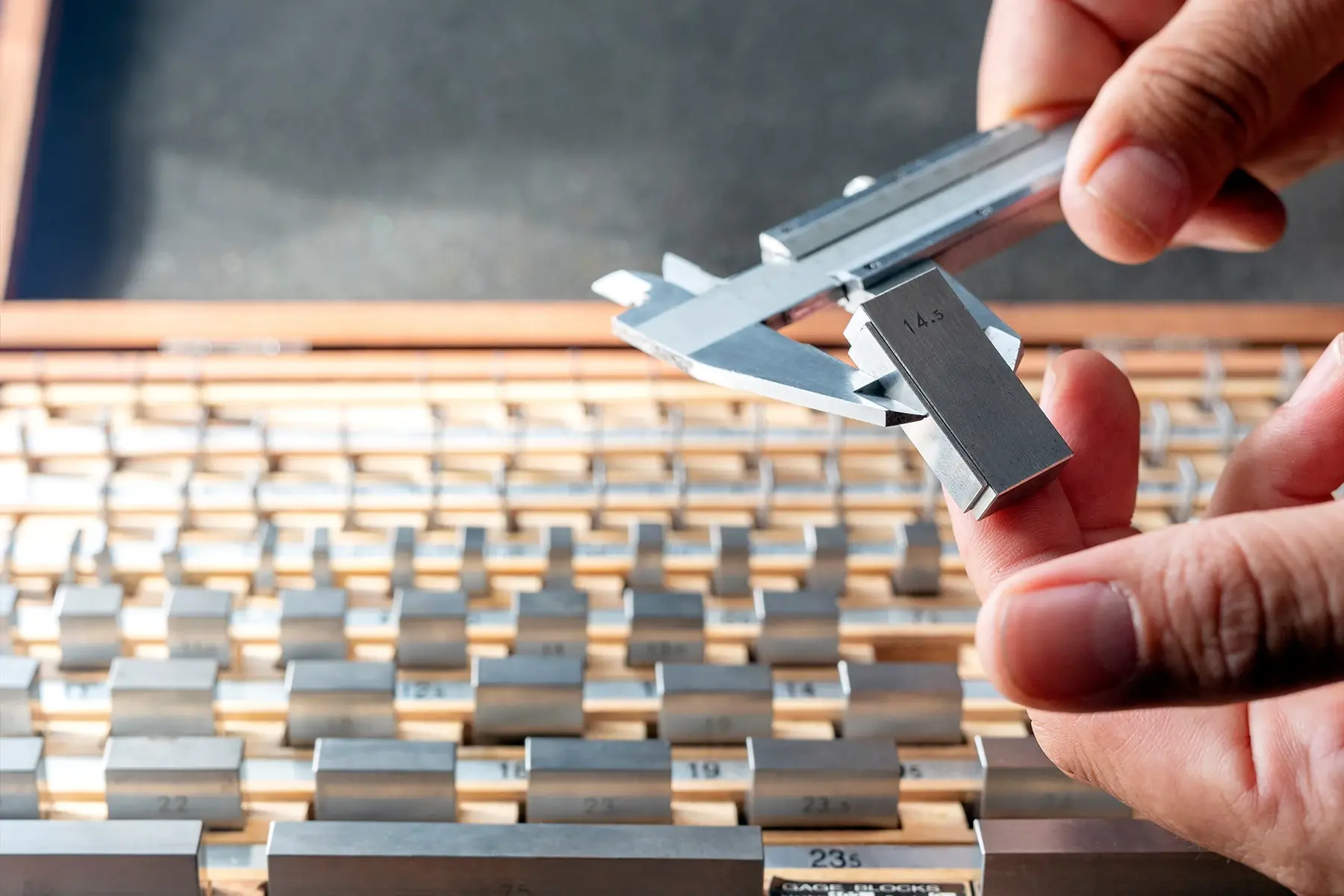
Gage blocks are precision-ground steel or ceramic blocks that represent known lengths with exceptional accuracy — typically within millionths of an inch. When properly calibrated, they serve as the dimensional reference standard for micrometers, calipers, height gages, and coordinate measuring machines across your facility.
Without NIST traceability, measurements made in your facility cannot be reliably compared with measurements made anywhere else — creating quality risk, compliance gaps, and audit exposure.
Why NIST Traceability Matters for Manufacturers
Manufacturing organizations operating under ISO 9001, AS9100, ISO 13485, and similar quality management standards must demonstrate measurement traceability as a fundamental requirement. For industries where measurement accuracy directly impacts safety and performance — aerospace, medical devices, automotive — traceable calibration is not optional. It is a baseline for operational and regulatory compliance.
Key risks of non-traceable calibration:
- Accepting out-of-tolerance parts or rejecting acceptable components
- Measurement errors that propagate through every instrument calibrated against the gage block
- Audit findings, corrective actions, or production holds from FDA, FAA, DoD, or NADCAP oversight
- Inability to compare measurement data meaningfully across facilities or supply chains
NIST traceability provides a common measurement language that connects your shop floor to international standards — and the documentation to prove it.
How NIST-Traceable Gage Block Calibration Works
The gage block calibration process follows a defined standards hierarchy:
- NIST primary standards represent the fundamental definition of length based on the international meter
- Accredited laboratory working standards are periodically calibrated against NIST or NIST-traceable references
- Customer gage blocks are calibrated against those laboratory working standards, establishing the traceability chain
During calibration, technicians with specialized training in dimensional metrology:
- Clean gage blocks thoroughly and allow them to stabilize at the standard reference temperature of 20°C
- Measure each block multiple times using precision comparators or laser interferometers
- Calculate actual length and associated measurement uncertainty
- Generate complete documentation including environmental conditions, equipment used, and traceability statements
Calibration is performed to ASME B89.1.9 and ISO 3650 specifications. The result is an accredited calibration certificate that satisfies audit requirements for quality management systems across regulated industries.
Gage Block Grades: Choosing the Right Accuracy Level
Not all gage blocks are calibrated to the same tolerance. ASME B89.1.9 defines four grades based on accuracy requirements:
- Grade 0.5 — highest accuracy; used as laboratory reference standards
- Grade 1 — inspection and calibration use
- Grade 2 — general inspection and shop use
- Grade K — reference grade; most accurate, used to calibrate Grade 0.5 blocks
The grade you need depends on where the blocks sit in your measurement hierarchy and the tolerances of the parts you're measuring. Your calibration provider can help you determine the appropriate grade for each application.
How Often Should Gage Blocks Be Calibrated?
Gage blocks should typically be calibrated every 1–2 years, though the appropriate interval depends on several factors:
- Usage frequency — blocks used daily require more frequent calibration than those used occasionally
- Environmental conditions — exposure to temperature swings, humidity, or contaminants accelerates wear
- Industry requirements — some standards (NADCAP, AS9100) may specify or influence intervals
- Historical performance — if calibration records show consistent results over time, intervals may be extended; repeated out-of-tolerance findings call for shorter cycles
Best practice is to establish calibration intervals based on risk assessment and review them annually against historical calibration data. Your ISO/IEC 17025 accredited calibration provider can help you set and justify appropriate intervals for your specific environment and quality system.
How Calibration Protects Product Quality and Process Control
Any dimensional error in a gage block propagates through every measurement made with instruments calibrated against it. Regular NIST-traceable calibration detects changes caused by wear, thermal cycling, or handling damage — before those errors affect production.
Organizations implementing statistical process control or continuous improvement initiatives need reliable, consistent measurement data to make sound decisions. NIST-traceable calibration ensures that data from different production sites, time periods, or supply chain partners can be meaningfully compared.
The result: fewer measurement-related production issues, less rework, and a stronger foundation for process optimization.
What Documentation Does a Calibration Certificate Include?
A compliant NIST-traceable calibration certificate must include:
- Unique identification of the calibrated item
- Calibration date and next due date
- Environmental conditions during calibration
- Measurement results with associated uncertainties
- Traceability statement referencing NIST or a recognized national metrology institute
- Name and accreditation body of the calibrating laboratory
Organizations subject to FDA, FAA, DoD, or NADCAP requirements must maintain complete calibration records. Missing certificates, expired documentation, or calibrations performed by non-accredited labs are among the most common audit findings — and among the most avoidable.
Beyond the certificate itself, a complete audit-ready program includes:
- Documented calibration procedures and intervals
- Records of gage block handling and storage
- Evidence of periodic interval review and adjustment
- A tracking system that alerts before certifications expire
Choosing an Accredited Calibration Partner
ISO/IEC 17025 accreditation is the international standard for calibration laboratory competence. It confirms that a laboratory maintains technical proficiency, follows documented procedures, and participates in ongoing proficiency testing.
When evaluating calibration providers, look for:
- Current ISO/IEC 17025 accreditation through A2LA or another recognized accrediting body
- Accreditation scope that explicitly covers dimensional calibration and the measurement ranges you need
- Controlled laboratory environments (temperature, humidity, cleanliness)
- Clear communication about measurement uncertainties and turnaround times
- Experience with your industry's specific regulatory requirements
For organizations with multiple facilities, consistency matters. A calibration partner with a nationwide network and standardized procedures ensures that gage blocks receive equivalent-quality calibration regardless of location — supporting coordinated quality management and meaningful cross-facility data comparison.
Find your nearest Accredited Labs branch →
Frequently Asked Questions
What does NIST-traceable mean for gage blocks? It means the gage block's dimensions have been verified through an unbroken chain of calibrations linking them to NIST primary standards — the national reference for the definition of length.
Who needs NIST-traceable gage block calibration? Any manufacturer operating under ISO 9001, AS9100, ISO 13485, or similar quality standards, as well as those subject to FDA, FAA, DoD, or NADCAP oversight. Industries where dimensional accuracy impacts safety — aerospace, medical devices, automotive — have the highest need.
How often should gage blocks be calibrated? Gage blocks should typically be calibrated every 1–2 years. The right interval depends on usage frequency, environmental conditions, applicable industry standards, and historical calibration performance.
What is ISO/IEC 17025 accreditation and why does it matter? ISO/IEC 17025 is the international standard for calibration laboratory competence. Calibrations performed by accredited labs carry greater credibility in audits and regulatory reviews than those from non-accredited providers.
Can gage blocks be used if the calibration certificate is expired? Using gage blocks with expired calibration certificates is a quality risk and audit liability. Measurements made against an uncalibrated standard cannot be verified as accurate, and expired certificates will trigger findings during internal and third-party audits.
What standards govern gage block calibration? The primary standards are ASME B89.1.9 (U.S.) and ISO 3650 (international). Calibration certificates from accredited laboratories reference these standards along with the specific NIST-traceable working standards used.
How do I know if a calibration lab's accreditation covers my gage blocks? Request the lab's accreditation scope document from their accrediting body (such as A2LA). The scope specifies which calibration types and measurement ranges are covered under accreditation.