

 Joe Moser - CEO
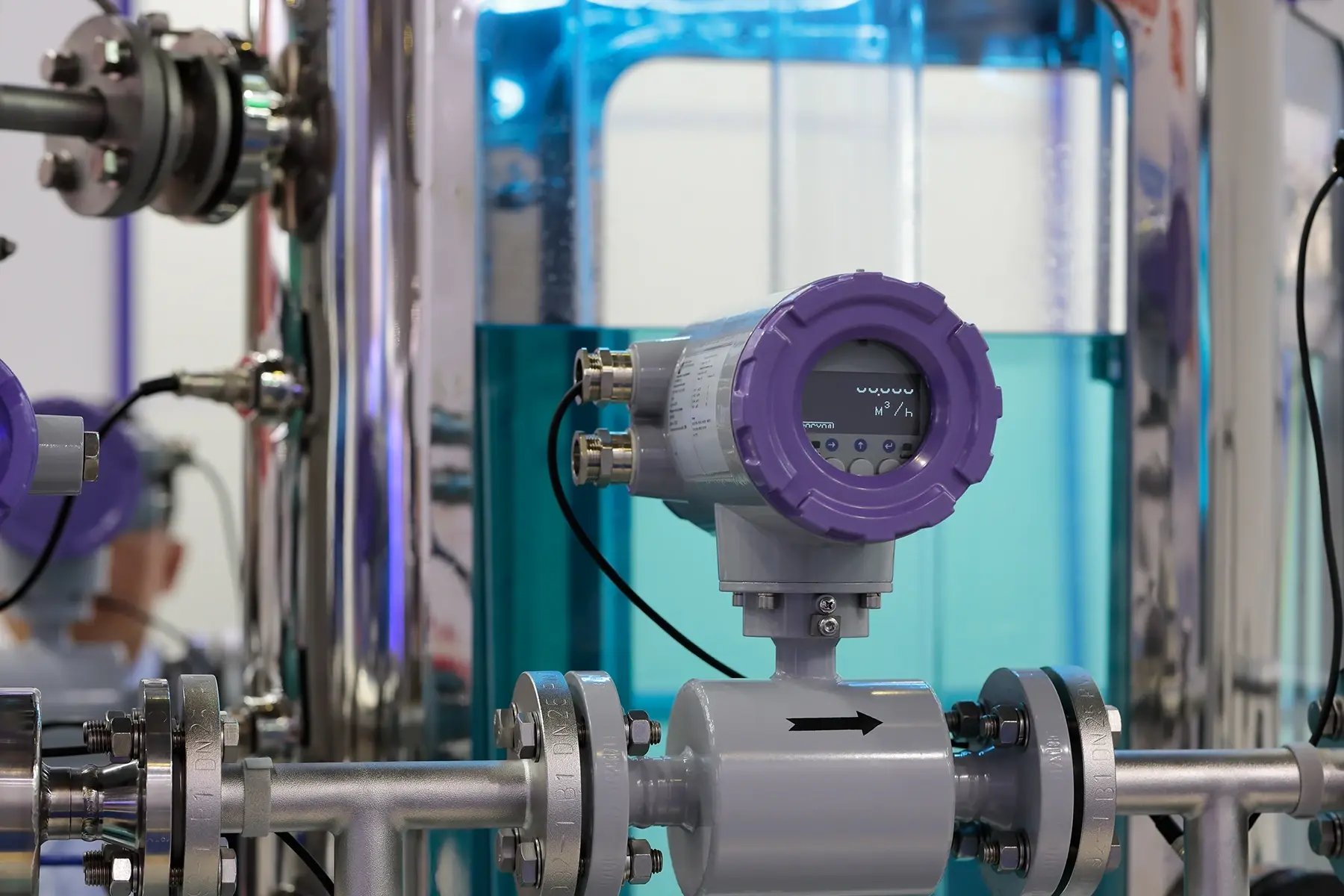

A flow meter that passes calibration should perform in the field. That assumption is reasonable — and often wrong.
Calibration confirms that an instrument meets specification under controlled conditions. How it performs once it's installed in a process line can be an entirely different story. The gap between those two environments is where most field measurement errors originate, and it's a persistent source of frustration for process engineers, instrumentation technicians, and quality managers trying to hold tight tolerances on a line that won't cooperate. It's also a gap that calibration alone won't close.
Understanding why flow meter calibration accuracy doesn't always translate to the field starts with recognizing that the lab and the process line are fundamentally different environments. This article breaks down the most common causes of process line flow meter reading errors, examines which meter types are most vulnerable to which conditions, and outlines practical steps for bringing lab performance and field performance into closer alignment.
Quick Answer: Why Does My Flow Meter Read Accurately in the Lab But Drift in the Field?
Flow meter calibration is performed under ideal, controlled conditions — stable flow, clean fluid, specified temperature and pressure, and adequate straight-pipe run. Process lines introduce variables that don't exist in the lab: distorted flow profiles, fluid contamination or viscosity changes, temperature and pressure swings, pulsation, and installation errors. Each of these can cause a meter to read inaccurately even though it passed calibration. Closing the gap requires calibration conditions that match actual operating conditions, plus an installation that gives the meter what it needs to perform as calibrated.
What "Accurate in the Lab" Actually Means
When a calibration laboratory validates a flow meter, it does so under conditions specifically designed to isolate instrument performance — stable, controlled flow; a clean, homogenous test fluid; ideal temperature and pressure; and adequate straight-pipe runs upstream and downstream.
Laboratories accredited to ISO/IEC 17025 follow documented procedures to ensure those conditions are reproducible and traceable to national measurement standards. The resulting calibration certificate rigorously confirms that the instrument performs as designed under those conditions.
That last phrase carries a lot of weight: under those conditions. A calibration certificate validates the instrument. It says nothing about the installation. Once the meter moves from the lab to a process line, every assumption that made the calibration valid is potentially off the table.
Why the Process Line Is a Different Environment
Real process environments introduce variables that no calibration lab fully replicates. Most flow measurement errors in the field trace back to one or more of the following:
Flow Profile Disturbances
Flow meters are designed to measure flow under a specific velocity profile — typically a symmetrical, fully developed one. Elbows, tees, partially open valves, reducers, and expanders all distort that profile. A meter installed two diameters downstream of a 90-degree elbow may be reading a swirling, asymmetric profile that its calibration never accounted for. The meter isn't broken. It's measuring something different than what the lab prepared it to measure.
Fluid Property Differences
Lab calibrations are almost always performed with water or another well-characterized reference fluid. Your process fluid may be more viscous, less conductive, entrained with gas bubbles, or carrying suspended solids — each of which deviates from validated calibration conditions. Viscosity changes alone can shift the operating Reynolds number enough to push a meter outside the range where its calibration factors apply.
Temperature and Pressure Swings
Thermal expansion affects physical geometry. Pressure fluctuations affect fluid density and, in some meters, sensor behavior. A meter calibrated at 70°F and 50 psi may perform differently at the elevated temperatures and pressures common in many processes. Phase changes near the meter — such as partial vaporization at a pressure drop — create conditions the lab never simulated.
Installation Errors
Wrong orientation for a meter that requires horizontal or vertical mounting, gasket intrusion at a flange joint that partially blocks the flow bore, and insufficient straight-pipe run upstream or downstream are among the most common installation errors. These happen regularly, especially when process lines are modified or meters are replaced under time pressure.
Pulsating and Turbulent Flow
Reciprocating pumps, compressors, and certain control valve configurations introduce pulsation into the flow stream. That cyclic variation in velocity creates measurement noise that steady-state lab calibration doesn't capture. Some meter types average out pulsation reasonably well. Others are significantly affected.
Flow Meter Calibration Accuracy by Meter Type
Different meter technologies have different sensitivities to field conditions. Knowing where each type is most vulnerable helps you determine the right corrective action — and whether your choice of flow meter technology is the right fit for your application in the first place.
Differential pressure meters (orifice plates): Susceptible to buildup on the primary element, gasket intrusion that alters bore geometry, and problems in the impulse lines that transmit pressure to the transmitter. Any of these can shift the measured differential and produce errors that look like instrument drift.
Magnetic flowmeters: Require a minimum fluid conductivity to function and depend on proper grounding to avoid signal noise from stray electrical currents in the process. Neither condition is evaluated during standard bench calibration.
Ultrasonic meters: Rely on acoustic signal transmission through the fluid. Coating or fouling on transducer faces attenuates the signal; entrained gas scatters it. The meter may continue reporting readings without flagging that signal quality has degraded to the point where those readings are unreliable.
Coriolis meters: Among the most accurate flow technologies available, but entrained gas disrupts the tube oscillation that drives the measurement. Vibration from nearby equipment at a frequency close to the meter's operating frequency can also introduce error that a calibration bench will never replicate.
Turbine meters: Sensitive to viscosity changes. Their calibration factors are Reynolds number dependent — meaning a fluid more viscous than the calibration fluid, or one that changes viscosity with temperature, can produce significant errors without any mechanical fault in the meter itself.
How to Improve Flow Meter Accuracy in the Field
The solutions to most field accuracy problems are well understood. They require deliberate action at the calibration and installation stages, not reactive troubleshooting after a problem surfaces.
Specify process conditions at calibration time.
If your process runs at 250°F and 300 psi with a fluid twice as viscous as water, tell the lab. An accredited calibration laboratory can often calibrate under conditions that more closely match your application, or characterize the meter's performance across a range of conditions so the uncertainty budget reflects actual use.
Request in-situ or field calibration.
Where feasible, calibrating or verifying a meter in place using a reference standard or traceable portable device eliminates the discrepancy between lab conditions and installed conditions. This is especially valuable for large-bore meters that are difficult to remove and for processes where shutdown time is costly.
Follow manufacturer straight-run requirements.
Most meters specify a minimum number of pipe diameters of straight, unobstructed pipe upstream and downstream. These requirements exist because upstream disturbances directly affect measurement accuracy. When installation geometry makes them impossible to meet, flow conditioners can help.
Use flow conditioning.
When straight-pipe run requirements can't be met due to space constraints or existing pipe layout, flow conditioners installed upstream of the meter reduce swirl and profile distortion. Straightening vanes and perforated plate conditioners are common options that can meaningfully improve measurement consistency without requiring a full installation redesign.
Calibrate at intervals that reflect process severity.
A fixed annual calibration schedule may be appropriate for a stable, low-stakes process. For a line running abrasive slurry, high-temperature cycling, or a fluid that fouls sensors, the calibration interval should reflect how quickly the environment degrades measurement performance.
Cross-check with a reference meter during commissioning.
A mass balance or reference meter run in parallel during initial commissioning provides a baseline comparison. If the installed meter and the reference disagree from day one, that's the time to investigate — not after six months of questionable production data.
When to Involve a Calibration Partner
Isolated drift after a process change is usually diagnosable in-house. A systemic pattern — multiple meters on the same line consistently reading high or low, or meters repeatedly failing calibration at short intervals — typically points to an installation or process condition issue that warrants closer inspection.
An accredited calibration provider brings more than a certificate to that conversation. They can evaluate as-found and as-left data across multiple calibration cycles to identify trends, document measurement uncertainty in a way that meets regulatory or quality system requirements, and assess whether the meter type and installation configuration are appropriate for the application.
On-site and mobile calibration capabilities add significant value when removing equipment is impractical or when the goal is to validate performance under actual operating conditions rather than bench conditions.
Frequently Asked Questions
Why does a flow meter that passed calibration read inaccurately in my process?
Calibration validates instrument performance under lab conditions — controlled flow, clean fluid, specified temperature and pressure. Process lines introduce flow profile disturbances, fluid property variations, temperature and pressure swings, and installation-related factors that calibration doesn't test. Any of these can degrade field accuracy even when the meter is mechanically sound.
What is in-situ flow meter calibration?
In-situ calibration (also called field calibration) validates a flow meter while it remains installed in the process line, using a traceable reference standard or portable measurement device. It eliminates the discrepancy between lab and field conditions and is particularly valuable for large-bore meters, high-criticality lines, or processes where extended shutdown for meter removal is costly.
How does viscosity affect flow meter calibration accuracy?
Many flow meter technologies — particularly turbine meters — have calibration factors that are Reynolds number dependent. When process fluid viscosity differs significantly from the calibration fluid, the meter may operate outside the Reynolds number range where its calibration factors apply, producing systematic errors that don't indicate any mechanical fault.
How often should flow meters be calibrated?
Calibration interval depends on process severity, regulatory requirements, and the meter's historical as-found condition. A stable, low-risk process may be well served by an annual schedule. Meters operating in abrasive, high-temperature, or fouling-prone processes may require more frequent calibration.
What causes flow profile disturbances in process piping?
Elbows, tees, partially open control valves, reducers, expanders, and pumps all distort the velocity profile that enters a flow meter. Installing a meter close to any of these fittings without adequate straight-pipe run upstream can cause systematic measurement errors that persist regardless of how well the meter was calibrated in the lab.
Get Flow Meter Calibration That Accounts for Your Process Conditions
A flow meter that reads accurately in a calibration lab is doing exactly what it was designed to do. Whether it reads accurately on your process line depends on how closely your installation matches the conditions under which it was calibrated. In many real-world applications, that gap is significant.
Closing the gap requires attention at both ends: calibration that accounts for actual operating conditions, and installation that gives the meter what it needs to perform as calibrated. Neither alone is sufficient.
If your flow meters are consistently drifting, producing unexplained batch variability, or flagging during audits, the problem is likely traceable to the difference in conditions between the lab and the line.
→ Contact Accredited Labs to discuss flow meter calibration tailored to your process conditions — so your meters remain accurate where it actually matters.