

9 min read
Torque Wrench Accuracy Explained: What ±4% Means and When It Matters
 Joe Moser - CEO
Published
Updated
Joe Moser - CEO
Published
Updated
A ±4% torque wrench accuracy rating means your tool may apply torque up to 4% above or below your target setting — so a wrench set to 100 ft-lbf could deliver anywhere from 96 to 104 ft-lbf.
Most torque wrenches on the market advertise an accuracy of "±4%," but that number often gets accepted at face value without much thought. On paper, it sounds precise. But what does it actually mean in practice, and how much does that variation matter?
The answer depends heavily on your application. A ±4% tolerance might be perfectly acceptable for one use case and completely inadequate for another. Understanding the math and real-world implications of accuracy specifications helps you make smarter decisions about which tools to use, how often to calibrate them, and where it's worth investing in tighter tolerances.
In this article, we'll take a detailed look at what ±4% accuracy really means in real-world terms. We'll cover how accuracy is calculated, how it varies across a tool's range, and how different industries interpret and apply these tolerances. Most importantly, we'll look at how to determine if a ±4% tolerance is appropriate for your specific needs.
What's the Difference Between Torque Wrench Accuracy and Precision?
Before diving into the numbers, it's worth clearing up a common source of confusion: accuracy and precision are not the same thing, and you need both.
Accuracy refers to how close a measurement is to the true value. A torque wrench that consistently reads 5% higher than the actual torque being applied is inaccurate, regardless of how consistent those readings are.
Precision refers to repeatability, or how consistently a tool produces the same result under the same conditions. A wrench that always reads 105 ft-lbf when applying 100 ft-lbf is precise but inaccurate. A wrench that reads 97, 101, and 103 ft-lbf under identical conditions is neither.
In fastening applications, you need both. Accuracy ensures you're meeting engineering specifications. Precision ensures repeatability across multiple fasteners, assemblies, or operators. That's why calibration certificates typically show both metrics. They show how close the tool is to target values (accuracy) and how consistent it is across repeated tests (precision).
How User Technique Influences Torque Wrench Accuracy
It’s easy to assume that accuracy begins and ends with the factory calibration, but in reality, the person using the torque wrench is just as important as the tool itself—sometimes more so. Several aspects of user technique can have a surprisingly large impact on how closely your wrench delivers the targeted torque:
-
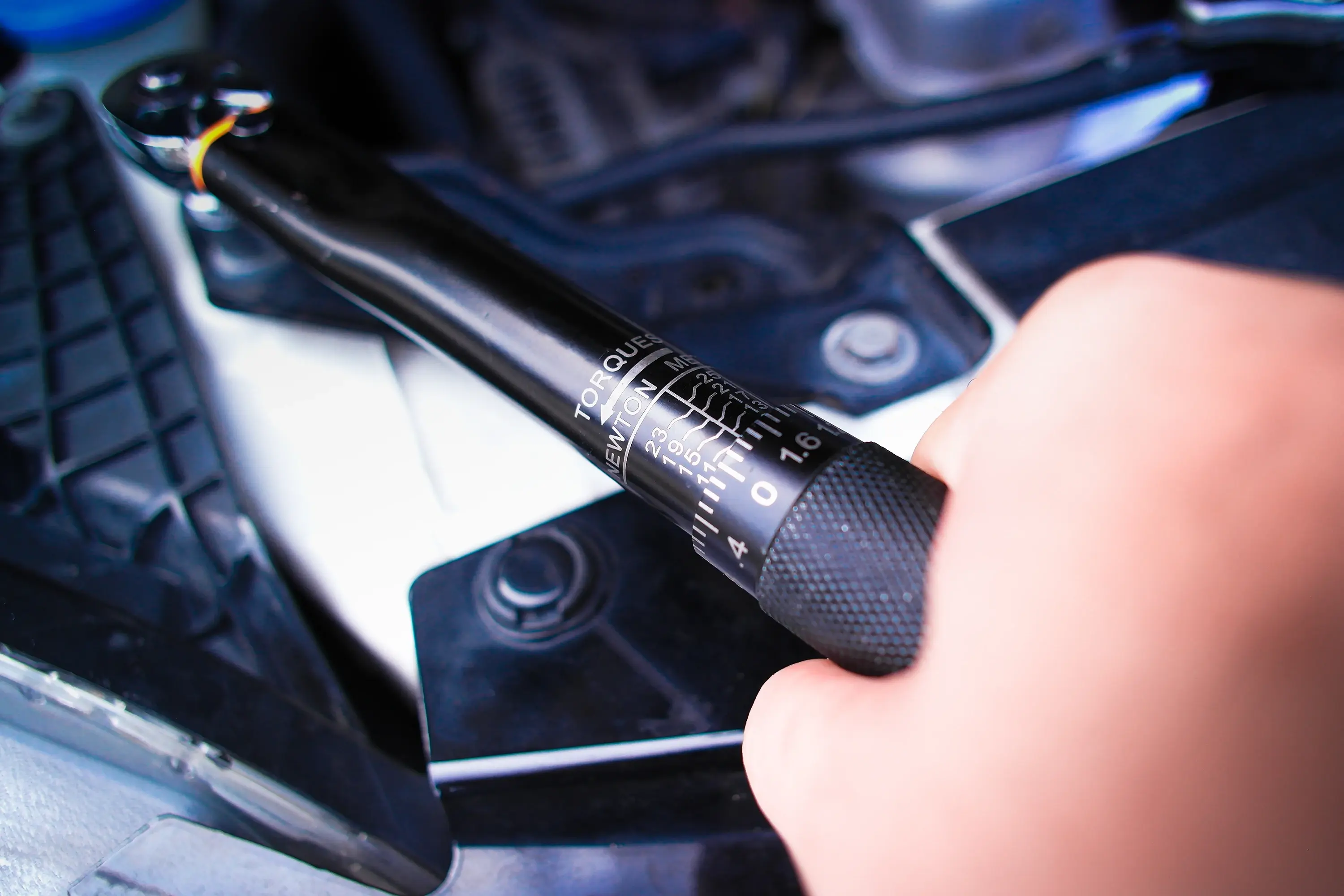
Setting the Wrench Accurately: The scale on a torque wrench needs to be read directly, at eye level. Looking at the adjustment dial from an angle (instead of straight on) can cause you to misread the value, unintentionally setting the tool above or below your intended target. Even a small misalignment can push your results outside the desired accuracy window.
-
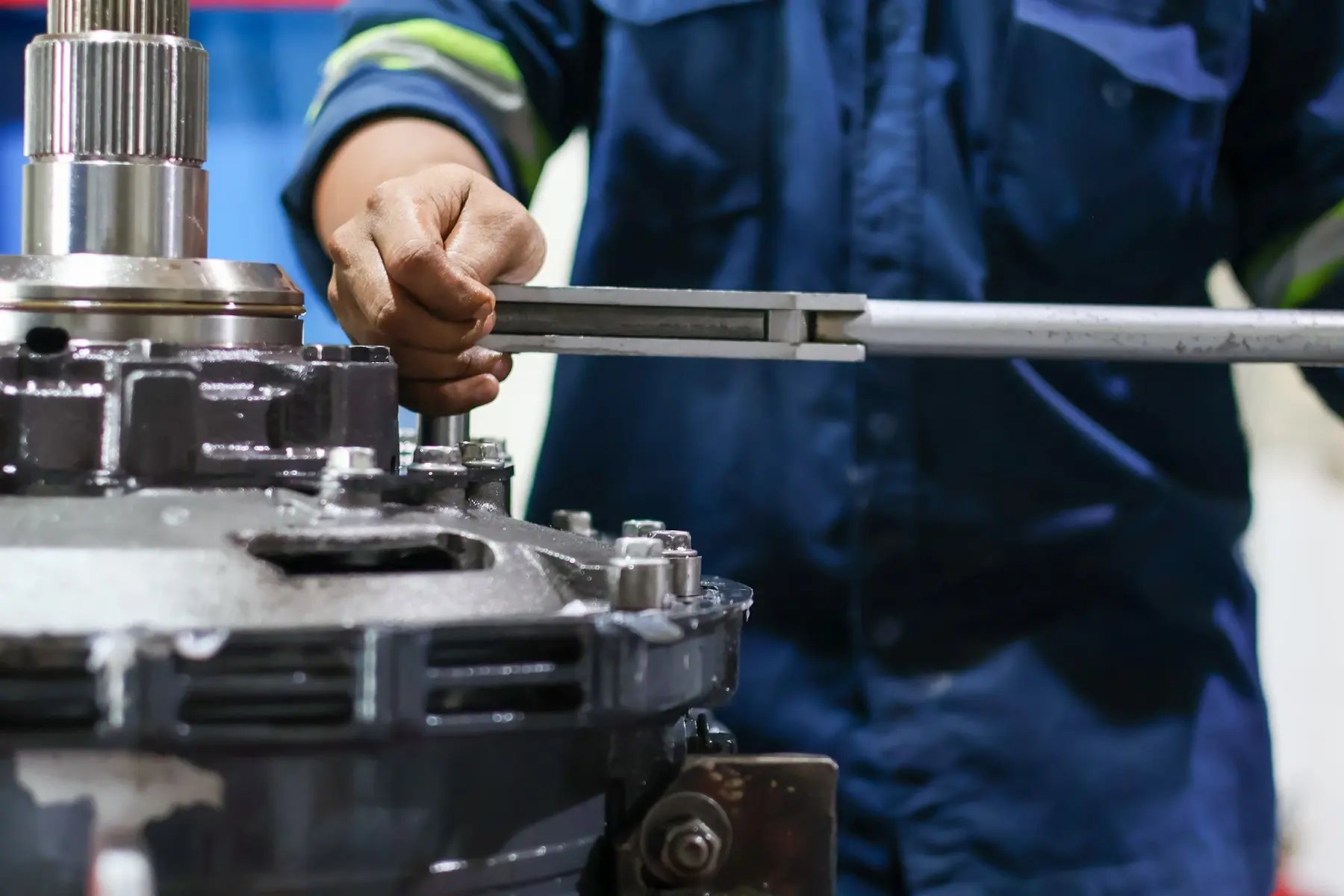
Applying Force Smoothly: The way you apply torque matters. Turning a wrench smoothly and slowly allows you to stop precisely at the indicated release point (the “click” or signal). If you swing the tool too quickly, you might breeze right past the set value, delivering extra force the moment after the wrench signals it’s reached target torque. This extra “overrun” can skew results, especially on smaller fasteners where tolerances are tight.
-
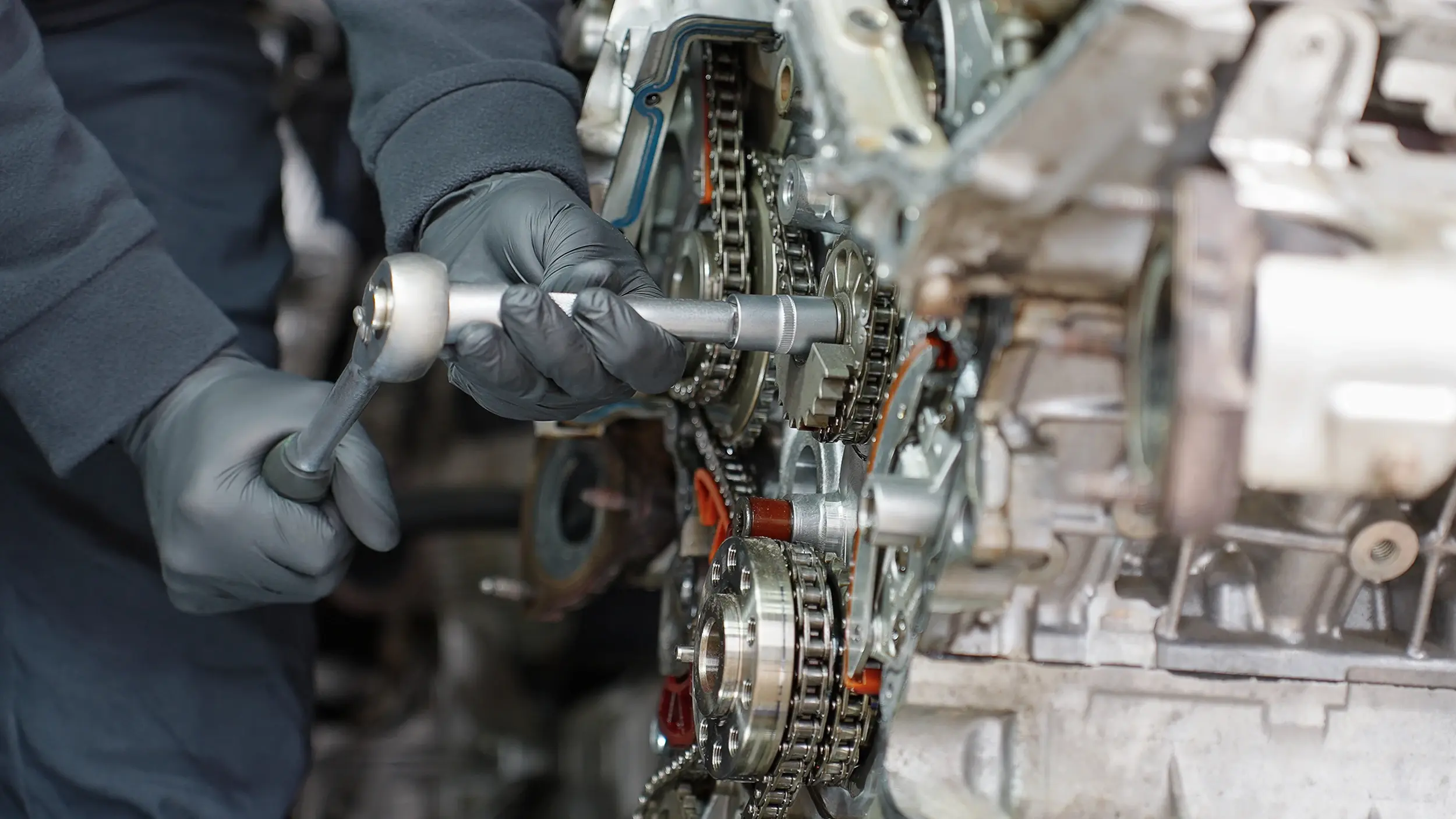
Proper Hand Placement: Most torque wrenches are designed to be operated with force applied only to the center of the handle. Gripping the wrench anywhere else—or applying a twisting force elsewhere on the body—can distort how the internal mechanism measures applied force. Some tools mark the correct grip spot for clarity; for others, using the midpoint of the handle is a safe bet.
Ultimately, even the most precisely calibrated wrench can’t compensate for careless adjustments or hurried operation. Attention to setup and deliberate, repeatable technique are critical if you want to get results that truly match the accuracy specification of your tool.
How External Factors Like Friction and Fastener Design Affect Torque Readings
It's not just the tool itself you have to worry about—external variables can easily throw off your torque measurements, sometimes outside the advertised specification. The most common culprits? Changes in friction, surface finish, temperature, material properties, and the shape or size of the fastener. Here's how each one can nudge your results:
-
Friction: Any change in friction at the fastener threads or under the bolt head can dramatically alter how much torque actually translates to useful clamp load. More friction means more of your effort is wasted overcoming resistance, so less of the torque tightens the joint. Less friction, and suddenly you might over-tighten without realizing it.
-
Surface Coatings: A zinc-plated bolt from Hillman or a Teflon-coated fastener from Fastenal may require less torque than an uncoated steel equivalent, simply because the coatings reduce friction. This can make your wrench "feel" spot-on while actually exceeding the desired clamping force.
-
Temperature: Metals expand, contract, and behave differently at various temperatures. A measurement taken in a chilly Minnesota garage in January might not match the same setup in a steamy Houston workshop in July.
-
Material Types: Aluminum, stainless steel, brass—each has different yield strengths and friction coefficients. Swapping materials without recalculating torque specs can lead to unreliable joints or even damage.
-
Fastener Shape and Size: Fine-threaded bolts versus coarse threads, oversized washers, undersized nuts—small dimensional changes can shift how the torque is distributed and ultimately affect accuracy.
All of these factors mean that even the best-calibrated wrench can't account for environmental and setup variables. Whenever those change, your actual results can drift away from what the certificate says—sometimes by more than ±4%. That’s why it’s critical to consider the whole assembly, not just the tool, when precision matters most.
What Does ±4% Torque Wrench Accuracy Mean in Real-World Terms?
When a torque wrench is rated at ±4% accuracy, that number is calculated relative to the setting/target value, not the full scale of the tool. So, for example, a wrench set to 100 ft-lbf with ±4% accuracy may actually deliver anywhere between 96 ft-lbf and 104 ft-lbf — an 8 ft-lbf window of potential variation. On a 250 ft-lbf wrench, that same ±4% translates to a potential range of 240 to 260 ft-lbf — a 20 ft-lbf spread.
What this means in practice is that percentage-based specifications compound as the target torque increases. What seems like a modest 4% tolerance can quickly become a much larger real-world gap in higher-torque applications.
There's another important nuance to consider when evaluating a wrench's accuracy: accuracy specifications are not uniform across a wrench's entire range. Most torque wrenches perform best in the middle 20–80% of their rated capacity. At the low end of the range (say, setting a 250 ft-lbf wrench to 30 ft-lbf), accuracy tends to degrade significantly. The same is true at the high end of a tool's range.
Manufacturers rate their tools at nominal conditions, not at the extremes. If your application regularly operates at the low or high end of your wrench's range, the effective accuracy may be considerably worse than what the spec sheet tells you it should be.
Why Do Torque Specification Conditions Matter?
Matching the specific conditions of your torque specification—such as whether the fastener should be dry or lubricated—to the actual situation at hand is critical for accuracy. That’s because the clamping force generated for a given torque isn’t just about what the wrench says; it's also heavily influenced by friction between the fastener and mating surfaces.
Factors like surface coatings, temperature, lubrication, material types, and even thread pitch all play a role in how much friction is present. If your specification assumes one set of conditions, but reality looks different, your results can stray far from what’s intended. For example, applying a dry torque spec to a greasy bolt doesn’t just throw off your numbers—it can easily lead to overtightening. Grease (or any lubricant) reduces friction, making it much easier for the fastener to turn with less resistance, which means a lot more clamping load is created before things start to “feel” snug.
To avoid unwanted surprises such as stripped threads, broken bolts, or compromised joint strength, always verify your torque values based on the actual installation conditions. If in doubt, consult the manufacturer’s specification for your exact scenario—or use reference resources from industry organizations like SAE or ISO, which often publish detailed tables covering both dry and lubricated fastener torques.
Being diligent here helps ensure your torque wrench isn’t just accurate in a lab, but truly effective in the field—with no surprises waiting after assembly.
What Torque Wrench Accuracy Do Different Industries Require?
Different industries have arrived at very different tolerance standards, driven by the consequences of getting it wrong.
| Industry | Typical Torque Accuracy Requirement | Notes |
|---|---|---|
| Aerospace | ±2–4% | Some specs require ±2–3%; highly regulated |
| Automotive (critical fasteners) | ±2–4% | Engine fasteners; varies by OEM spec |
| Automotive (general assembly) | ±4–6% | Lug nuts, body panels, non-critical joints |
| Medical devices | ±2% or tighter | Often a regulatory/FDA requirement |
| General manufacturing & maintenance | ±5–10% | Wider tolerance acceptable for non-critical joints |
Ultimately, it's the consequence of inaccuracy that creates these varying tolerance requirements. If a fastener in the flight control assembly of an aircraft isn't torqued to the right specs, it's a much different story compared to a fastener on an HVAC unit access panel, for instance.
When Is ±4% Torque Wrench Accuracy Not Enough?
While a torque wrench with an accuracy of ±4% is adequate for most fastening applications, there are some applications where ±4% is not good enough.
Critical safety fasteners (defined as fasteners whose failure could directly injure someone or cause a catastrophic event) usually require tighter tolerances. Medical devices, aircraft primary structures, and pressure vessel closures frequently specify torque to ±2% or better.
In high-liability applications, stricter tolerances also serve as a way to mitigate legal risk. If a fastener fails and a lawsuit is filed, calibration records and accuracy specifications become key evidence that is considered for determining liability.
There are also many cases where greater accuracy is a regulatory requirement. This includes examples like:
- FAA regulations in aviation
- FDA guidelines in medical device manufacturing
- ISO standards in quality-controlled environments
In these cases, ±4% may not meet compliance requirements.
When ±4% isn't sufficient, you have two main options: invest in tighter-tolerance tools designed to operate within ±1–2%, or increase calibration frequency so that any drift in a ±4% tool is caught and corrected before it becomes a problem. In practice, highly critical applications typically do both.
When Does High Torque Accuracy Become Unnecessary?
On the other end of the spectrum, not every fastening application needs high-precision torque control. While it may seem logical to err on the side of caution, requiring strict tolerances when they aren't necessary can drive up your calibration costs without providing any significant benefit.
General maintenance tasks, non-structural fasteners, and equipment that tolerates a wide range of clamp forces simply do not require tight accuracy. Since maintaining tighter tolerances often means more expensive tools, more frequent calibration, and more downtime, the trade-offs of higher accuracy aren't worth it when it isn't needed.
The smarter approach is risk-based. Instead of applying a blanket standard, consider determining which of your applications are critical fasteners and which are non-critical. This will allow you to focus your calibration budget on the wrenches used for critical fasteners while extending calibration intervals for non-critical applications.
How Does Calibration Maintain Torque Wrench Accuracy?
Calibration is the primary tool for maintaining torque wrench accuracy over time. It is the process of verifying (and, if needed, adjusting) a torque wrench against a known standard to confirm that it's operating within its accuracy specification.
During calibration, a certified technician applies known loads to the wrench and measures the actual output, typically at multiple points across the wrench's range. The as-found data shows what the wrench was doing before any adjustment. This is critical information because if the as-found reading is out of tolerance, every job performed since the last calibration may need to be reviewed. As-left data shows the condition of the wrench after adjustment, confirming it meets spec before being returned to service.
One of the reasons calibration is essential is the fact that wear affects torque wrench accuracy in predictable ways. The ratcheting mechanisms, spring assemblies, and click mechanisms inside torque wrenches all degrade over time and use, and a wrench that met ±3% when new may drift to ±5% or worse after heavy use. Calibration is the only reliable way to detect and correct such a drift.
A good calibration report will show readings at multiple torque settings, both as-found and as-left, with clear pass/fail designations relative to the tool's specs. This allows you to be confident that the tool is actually maintaining its specified accuracy.
How to Determine the Right Torque Wrench Accuracy for Your Application
Choosing the right torque accuracy is not about defaulting to ±4%. It's about aligning your tools with your actual requirements.
With that in mind, here's a simple framework you can use to determine your accuracy needs:
- Define the application — What is the fastener securing? What happens if it fails?
- Determine acceptable variation — How much torque deviation can the joint tolerate?
- Assess risk — Consider safety implications, regulatory requirements, and cost of failure.
- Match the tool to the need — Select an accuracy level that fits your requirements.
Key questions to ask during this evaluation process include:
- Is this a safety-critical fastener?
- Are there industry standards that apply?
- What is the cost of over- or under-tightening?
- How consistent does the process need to be?
Keep in mind that if you are ever unsure, working with a calibration provider or torque specialist can help. They'll be able to evaluate your application, recommend the right tools, and establish calibration intervals that balance accuracy and cost.
Frequently Asked Questions About Torque Wrench Accuracy
What does ±4% accuracy mean on a torque wrench? A ±4% accuracy rating means the wrench may deliver torque up to 4% above or below the target setting. At 100 ft-lbf, that's a potential range of 96–104 ft-lbf. At 250 ft-lbf, the variation spans a 20 ft-lbf window (240–260 ft-lbf).
Is ±4% accuracy good enough for most applications? Yes — ±4% is adequate for the majority of general manufacturing, maintenance, and automotive assembly applications. It may not be sufficient for safety-critical fasteners in aerospace, medical devices, or pressure vessel applications, which often require ±2–3% or tighter.
How often should a torque wrench be calibrated? Calibration frequency depends on usage intensity, application criticality, and manufacturer recommendations. A common starting point is annual calibration, but high-use tools in critical applications may require more frequent intervals. Your calibration provider can help establish a schedule based on your specific needs.
Does torque wrench accuracy change across the tool's range? Yes. Most torque wrenches perform best in the middle 20–80% of their rated capacity. Accuracy tends to degrade at the low and high ends of the range, so the effective tolerance may be wider than the spec sheet indicates when operating near those extremes.
What's the difference between torque wrench accuracy and precision? Accuracy measures how close a reading is to the true value. Precision measures how consistently the tool repeats the same result. Both matter: accuracy ensures you meet engineering specs; precision ensures repeatability across fasteners and operators.
Conclusion
Right-sizing accuracy requirements saves money without sacrificing quality. It allows you to meet the tolerances necessary for your application without going overboard in a way that jacks up calibration costs.
Understanding torque wrench accuracy — what the percentage means in real torque units, how it changes across a wrench's range, and how different industries set their requirements — will give you a good foundation for determining the right tolerance for each application. A knowledgeable calibration partner can also play a key role in this process, helping you interpret specifications, evaluate risk, and implement a strategy that works for your operation.
→ Find your nearest Accredited Labs location