


5 min read
Temperature Calibration: Why It Matters and When to Calibrate
 Joe Moser - CEO
May 25, 2026 11:14:20 AM
Joe Moser - CEO
May 25, 2026 11:14:20 AM
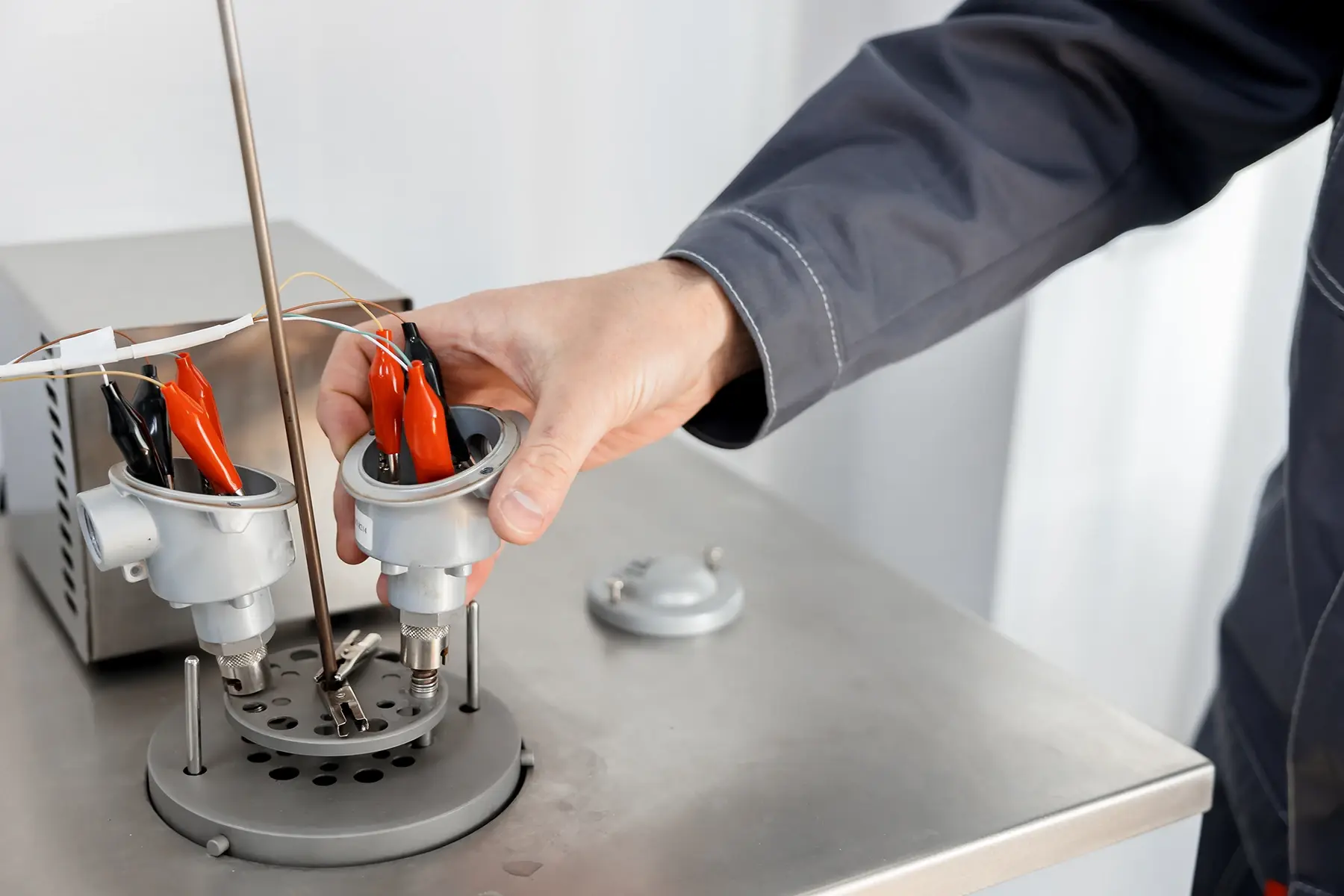
Temperature is one of the most measured variables in industry, and one of the most consequential when it drifts. A reading that's off by just a few degrees can compromise product quality, trigger batch failures, and expose a facility to regulatory risk.
Here's where inaccurate temperature measurement creates real problems:
Product quality and safety. In food processing, pharmaceutical manufacturing, and chemical production, temperature determines whether a product is safe and effective. A miscalibrated temperature sensor doesn't just produce bad data — it can produce dangerous product.
Regulatory and quality system compliance. ISO/IEC 17025, FDA 21 CFR Part 11, HACCP, GMP, and ASTM standards all require that measurement instruments used in critical processes be calibrated at defined intervals, with records to prove it. Failing an audit because of a temperature instrument isn't a documentation problem — it's a calibration program problem.
Process efficiency and yield. Inaccurate temperature readings in industrial processes lead to over- or under-processing, scrap, rework, and energy waste. In high-throughput manufacturing, small systematic errors add up quickly.
Equipment protection. Many processes rely on temperature readings to protect equipment — triggering shutdowns before overheating occurs, for example. A sensor that reads low gives a false sense of safety.
The bottom line: temperature calibration is not a formality. It's a foundational part of measurement confidence.
How Temperature Calibration Works
Temperature calibration compares your instrument's output against a reference standard — typically a dry-block calibrator, liquid bath, or fixed-point cell — that has itself been calibrated against NIST-traceable standards.
The process typically follows these steps:
- Document the instrument — record the make, model, serial number, and any existing calibration history.
- Allow the instrument to stabilize — the sensor must reach thermal equilibrium with the reference before measurements are taken.
- Take measurements at multiple set points — calibration at a single point is rarely sufficient; most specifications require three to five points across the instrument's operating range.
- Record as-found data — this captures the instrument's condition before any adjustment. As-found data is critical for trend analysis and for demonstrating that previous readings were within tolerance.
- Adjust if necessary — if readings fall outside the acceptable tolerance band, the instrument is adjusted or repaired.
- Record as-left data — confirms the instrument's condition after any adjustment was made.
- Issue a calibration certificate — documenting the reference standards used, measurement uncertainty, and traceability chain.
Accredited calibration providers issue certificates supported by ISO/IEC 17025 accreditation — the internationally recognized standard for calibration and testing laboratory competence.
How Often Should You Calibrate Temperature Instruments?
There is no universal answer, but there are clear principles that should drive your calibration interval decisions.
The short answer: Most temperature instruments in industrial or regulated environments should be calibrated annually at minimum. Higher-stakes applications — pharmaceutical, food safety, aerospace, primary standards — typically require more frequent calibration, often every 90 days to six months.
The right interval depends on several factors:
How critical is the measurement?
Instruments controlling a critical process parameter — a sterilization cycle, an annealing furnace, a stability chamber — need more frequent attention than general monitoring sensors. A drift that would be insignificant in ambient monitoring could be catastrophic in a temperature-controlled biorepository.
How stable is the instrument?
Some sensor types drift more than others. Thermocouples are susceptible to drift from oxidation, thermal fatigue, and contamination. RTDs are more stable but can shift from vibration or mechanical stress. Review manufacturer specs and, more usefully, your own historical calibration data to understand how your specific instruments behave over time.
What do your regulatory or quality standards require?
If you operate under ISO/IEC 17025, GMP, FDA regulations, or ASTM test method requirements, those frameworks may specify maximum calibration intervals. Your quality system's requirements are a floor, not a ceiling.
Has anything changed?
Any of the following should trigger an out-of-cycle calibration:
- The instrument was dropped, subjected to shock, or exposed to a harsh environment
- Process conditions changed (new temperature range, different media, more extreme cycling)
- A product or process failure is suspected to involve measurement error
- The instrument was repaired or modified
- Readings appear inconsistent with expected process behavior
What does your calibration history show?
If an instrument consistently comes in within tolerance at each calibration interval, you may have grounds to extend the interval — with documented evidence. If it frequently drifts, shorten the interval or investigate the root cause.
Common Temperature Instrument Types and Calibration Considerations
| Instrument Type | Common Applications | Key Calibration Consideration |
|---|---|---|
| Thermocouple | Furnaces, ovens, process lines | Drift-prone; check for contamination and oxidation |
| RTD (Pt100/Pt1000) | Pharmaceutical, laboratory | More stable; verify resistance element integrity |
| Thermistor | HVAC, medical devices | Narrow range; calibrate near operating point |
| Infrared thermometer | Non-contact surface measurement | Emissivity settings affect accuracy significantly |
| Temperature transmitter | Industrial control loops | Calibrate the full loop, not just the sensor |
| Data logger / recorder | Environmental monitoring, cold chain | Verify sensor and recording function together |
In-Lab vs. On-Site Temperature Calibration
In-lab calibration offers the most controlled conditions and is preferred when instruments can be removed from service and transported. Lab calibration typically provides the lowest measurement uncertainty because reference equipment can be used in its optimal environment.
On-site (in-situ) calibration is necessary when instruments can't be removed — large fixed sensors, process transmitters, or equipment where removal would disrupt operations. On-site calibration also allows you to verify the instrument in its actual operating environment, which can reveal installation-related errors that bench calibration would miss.
For operations with large instrument populations or geographically distributed facilities, mobile calibration services — where a certified technician comes to your site — offer a practical way to maintain compliance without shipping sensitive instruments.
Signs Your Temperature Instruments May Need Calibration Now
Don't wait for your next scheduled interval if you're seeing:
- Unexplained process variation or product quality issues
- Readings that seem inconsistent with process conditions
- Temperature alarms triggering outside of normal operating parameters
- Failed product lots where temperature was a process variable
- An instrument that was dropped, jarred, or exposed to a harsh event
- A failed internal audit or customer quality concern referencing measurement data
Any of these is grounds for an immediate calibration check.
Frequently Asked Questions About Temperature Calibration
What is temperature calibration and why is it important? Temperature calibration is the process of verifying and documenting that a temperature instrument reads accurately against a traceable reference standard. It matters because inaccurate temperature measurements can compromise product quality, cause regulatory non-compliance, and create safety risks in industries where temperature controls critical processes.
How often should temperature instruments be calibrated? Most temperature instruments used in industrial or regulated environments should be calibrated at least annually. Higher-risk applications — pharmaceutical manufacturing, food safety, laboratory reference standards — typically require calibration every 90 days to six months. Calibration intervals should be based on instrument stability history, regulatory requirements, and the criticality of the measurement.
What is NIST traceability in temperature calibration? NIST traceability means the calibration reference standard used to calibrate your instrument can be traced through an unbroken chain of comparisons back to the National Institute of Standards and Technology's primary temperature standards. Traceability is a requirement for calibration certificates to be accepted under most quality and regulatory frameworks.
Can I calibrate temperature instruments on-site, or do they need to go to a lab? Many temperature instruments can be calibrated on-site by a certified calibration technician using portable reference equipment. On-site calibration is often preferred for permanently installed sensors, transmitters, and equipment that can't be taken out of service. Laboratory calibration generally offers lower measurement uncertainty and is preferred for reference instruments and highly precise applications.
What is the difference between accuracy and resolution in a temperature instrument? Resolution is the smallest increment a temperature instrument can display — for example, 0.1°C. Accuracy describes how close the displayed reading is to the true temperature. An instrument can have high resolution (many decimal places) but poor accuracy (readings consistently off by several degrees). Calibration addresses accuracy, not resolution.
What standards govern temperature calibration? Temperature calibration is governed by several standards depending on the industry. ISO/IEC 17025 is the overarching standard for calibration laboratory competence. Industry-specific standards include ASTM E77 (liquid-in-glass thermometers), ASTM E220 (thermocouples), and regulatory frameworks such as FDA 21 CFR Part 820 and USP requirements for pharmaceutical applications.
Work With a Calibration Partner You Can Count On
Temperature calibration done right isn't just a checkbox — it's a defensible record of measurement confidence. That requires accredited standards, documented uncertainty, and technicians who understand your instruments and your industry.
Accredited Labs provides temperature calibration services across a national network of laboratories, with ISO/IEC 17025 accreditation and on-site calibration capabilities for facilities that can't afford downtime.