

5 min read
6 Environmental Factors Destroying Your Scale Accuracy (And How to Fix Them)
 Joe Moser - CEO
Published
Joe Moser - CEO
Published
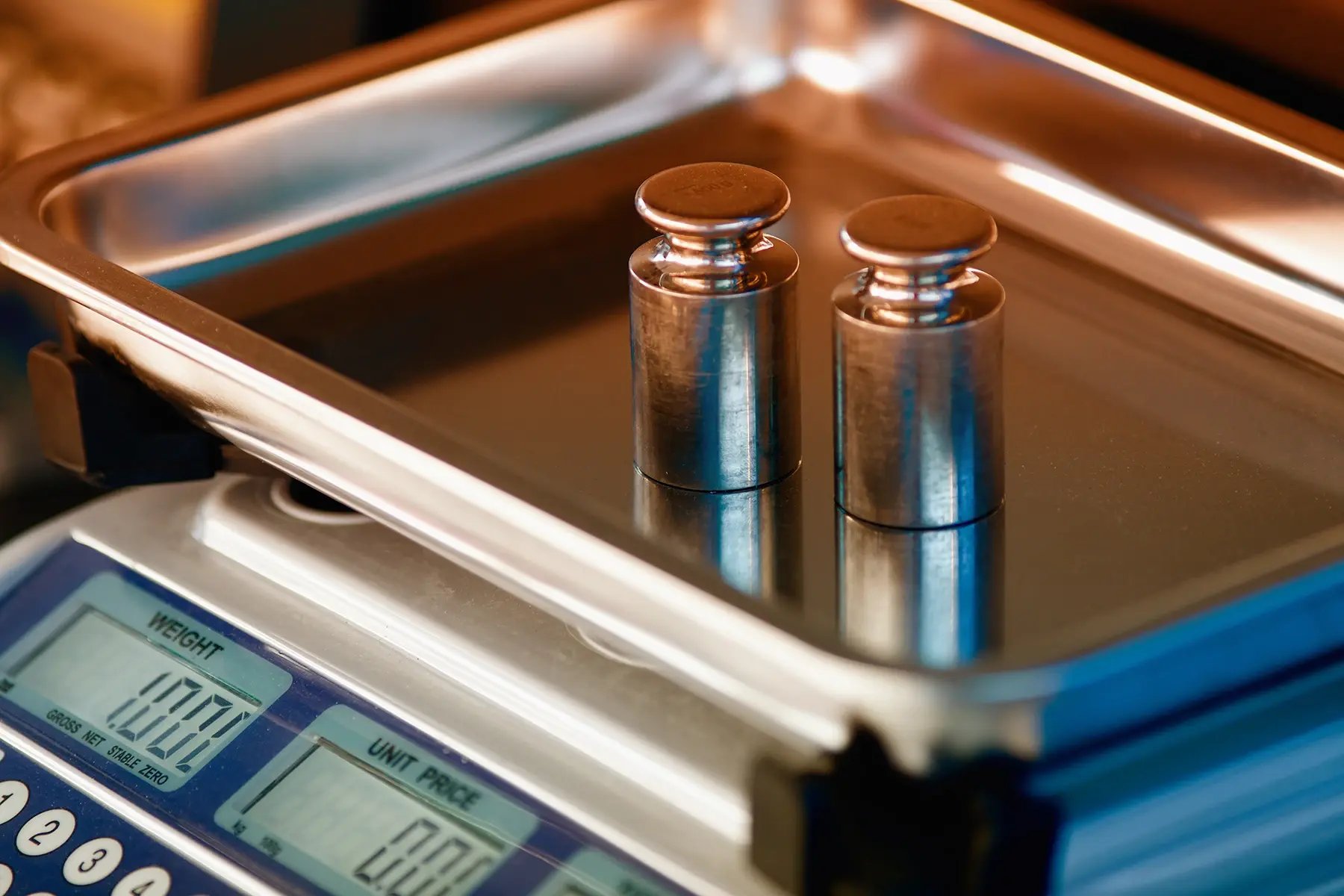
Environmental conditions are one of the most common — and most overlooked — sources of weighing error in industrial and laboratory settings. Even a perfectly calibrated scale can produce unreliable results when its environment is working against it. Understanding these factors doesn't just save you time and frustration; it's a fundamental part of maintaining measurement integrity.
Here are six environmental culprits that may be undermining your scale accuracy, and what you can do about each one.
Factor #1: Temperature Fluctuations
Temperature is arguably the most pervasive environmental threat to weighing accuracy. Load cells — the sensing elements at the heart of most electronic scales — are precision mechanical devices. Like all physical materials, they expand and contract with temperature changes. Even small shifts can alter the mechanical properties of the load cell and the structural components around it, introducing measurable error into every reading.
One telltale sign of a temperature problem is morning vs. afternoon drift: readings that are stable at the start of the day but gradually shift as the room warms up, or that vary noticeably between seasons. This is especially common near exterior walls, loading docks, or anywhere exposed to ambient temperature swings.
Practical fixes:
- Allow adequate warm-up time before taking critical measurements (consult your scale's documentation for recommended duration)
- Relocate scales away from exterior walls, windows, and HVAC supply vents
- Maintain consistent climate control in weighing areas
- If the environment can't be controlled, consider a scale with a wider compensated temperature range
Factor #2: Air Currents and Drafts
It seems counterintuitive — how could moving air affect a scale weighing dozens or even hundreds of pounds? But on sensitive analytical or precision balances, even a gentle draft can apply enough force to cause erratic, unstable readings.
The sources are often invisible and intermittent: an HVAC vent cycling on, a door opening down the hallway, foot traffic creating air displacement near an open bench. These forces aren't large, but they don't need to be. On a balance with 0.001g resolution, a slight, steady air current can be the difference between a reading you can trust and one you can't.
Practical fixes:
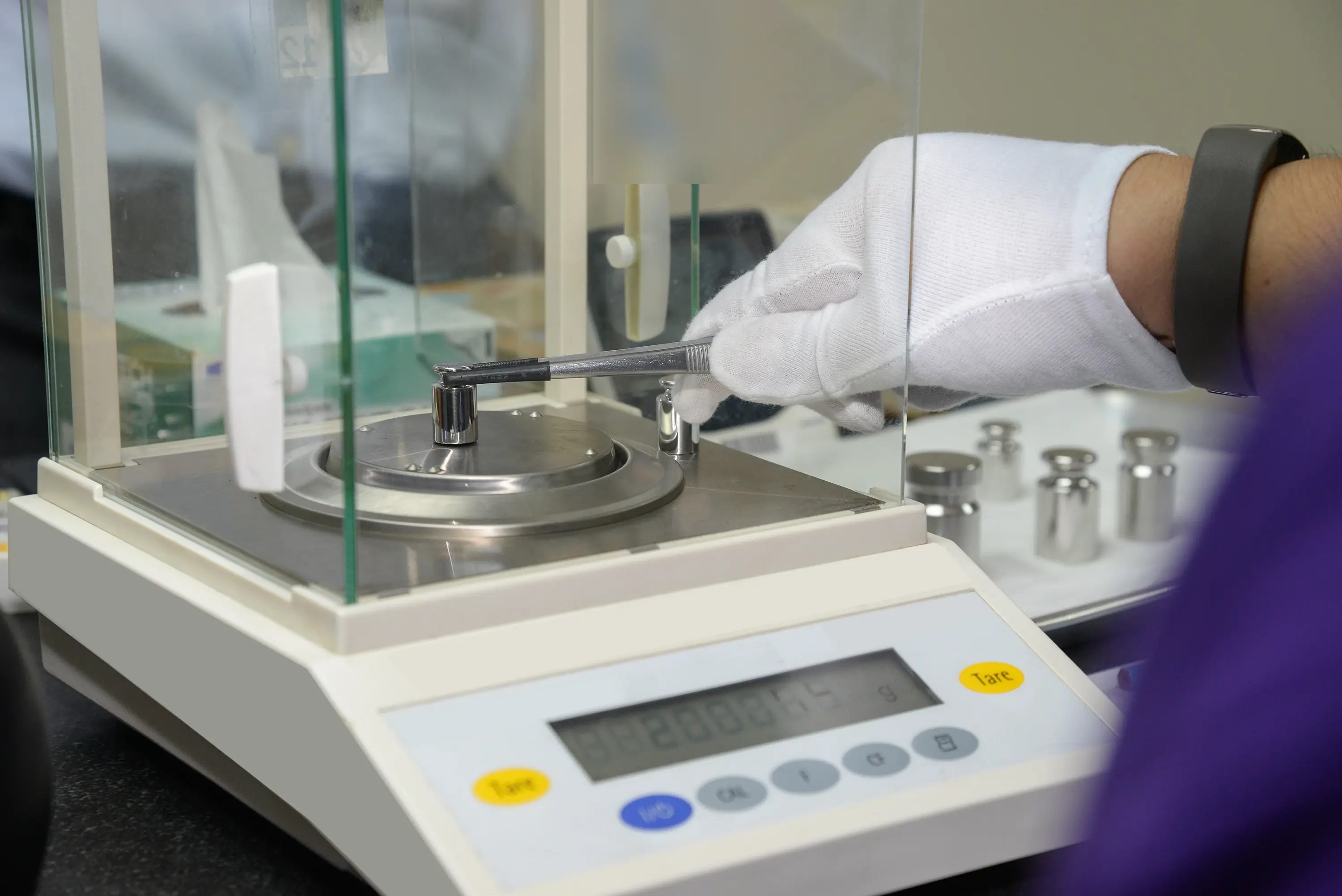
- Use draft shields or enclosed weighing chambers for sensitive balances
- Identify and close or redirect nearby HVAC vents
- Establish a designated, low-traffic weighing area
- For ultra-precision applications, consider a dedicated weighing room with controlled air circulation
Factor #3: Vibration
Any scale measures force — and vibration introduces force. Machinery, HVAC systems, foot traffic, nearby vehicles and loading dock activity all generate vibration that travels through floors and surfaces into your scale's load cell. The result shows up as weight readings that fluctuate, fail to settle, or trend in ways that don't correlate with the actual load.
Different types of scales respond differently to vibration. A platform scale in a factory environment may be equipped with vibration filtering software that handles typical industrial noise. But push it beyond its design tolerance, or introduce a new vibration source (a new piece of nearby equipment, for example), and that filtering may not be enough.
Practical fixes:
- Use vibration isolation tables or anti-vibration pads under precision balances
- Relocate scales away from high-vibration areas — walls shared with compressors, pumps, or heavy machinery are common problem spots
- Evaluate whether your scale's vibration damping settings are configured for your environment
- Avoid placing scales directly on grated flooring or surfaces that transmit vibration efficiently
Factor #4: Humidity and Moisture
Electronic scales and moisture are a difficult combination. High humidity can cause condensation on internal electronic components, leading to corrosion, leakage currents, and signal noise that manifests as erratic or drifting readings. In some cases, the damage accumulates gradually — the scale seems fine until one day, it simply doesn't.
Moisture also creates a secondary challenge with certain sample types. Hygroscopic materials — powders, chemicals, and biological samples that absorb water from the air — can change weight during the act of being weighed. This isn't a scale malfunction; it's a materials handling issue. But it produces the same result: unreliable data.
Practical fixes:
- Maintain relative humidity within the range specified by your scale manufacturer
- Use protective covers or enclosures for scales in humid environments
- For hygroscopic samples, work quickly, use sealed containers, or weigh in a desiccated environment
- If condensation is a recurring issue, a dehumidifier or climate-controlled enclosure may be warranted
Factor #5: Static Electricity
Static is one of the most frequently overlooked sources of weighing error — and one of the more maddening, because it can be nearly impossible to diagnose without knowing to look for it.
When a charged object (or person, or container) is placed on or near a scale, the electrostatic field interacts with the instrument's components and can produce a false force reading. The scale isn't weighing what you think it's weighing. Static problems are particularly pronounced in winter months, when lower humidity allows charge to build up more easily, and with certain materials: plastics, lightweight powders, and pharmaceutical granules are especially prone.
Symptoms often look like random, unpredictable variation — readings that change each time you place the same sample, or that shift when you move your hand near the pan.
Practical fixes:
- Use an ionizer (also called an ionizing blower) to neutralize static charge near the weighing area
- Ground the scale properly, and ensure sample containers are also grounded when possible
- Use conductive or dissipative containers instead of standard plastic
- Maintain moderate humidity (45–60% RH) to reduce charge accumulation
- Anti-static mats and wrist straps can help in operator-intensive workflows
Factor #6: Electromagnetic Interference (EMI)
Modern electronic scales rely on low-level electrical signals from their load cells and sensors. Those signals are vulnerable to electromagnetic noise generated by motors, welders, radio transmitters, induction heaters, and yes — even cell phones held near sensitive balances.
EMI problems are notoriously difficult to diagnose because they're often intermittent. The interference appears when a nearby machine cycles on, when someone walks past with a radio, or when a welder fires up in an adjacent area. Without knowing to look for the correlation, it's easy to chalk it up to a finicky scale or an unstable sample.
Practical fixes:
- Relocate scales away from motors, VFDs, welding stations, and other EMI-generating equipment
- Use shielded cables and properly grounded enclosures
- Ensure the scale is connected to a clean, isolated power circuit — not shared with high-draw equipment
- Some scales include EMI filtering; verify that yours is enabled and adequate for your environment
- Wireless communication near precision balances should be evaluated and minimized where possible
Creating a Proper Weighing Environment
The most effective approach to environmental control isn't reactive — it's preventive. Before installing a scale in a new location, a brief site survey can save significant time and cost down the road.
A few things to assess before installation:
- Is the area climate-controlled, and how stable is the temperature throughout the day and season?
- Are there visible HVAC vents, open doors, or traffic patterns that could create drafts?
- What machinery, equipment, or electrical systems are nearby?
- Is the floor surface rigid and vibration-resistant?
- What materials will be weighed, and do they have any special handling requirements?
Simple diagnostic tests — like observing the scale's display with no load over time, or checking readings while nearby equipment cycles on and off — can reveal environmental issues before they become ongoing problems.
When a quality system requires it, documenting environmental conditions at the time of measurement adds an important layer of traceability. Temperature, humidity, and any unusual conditions can be recorded alongside the measurement data, providing context that's invaluable if a result is ever questioned.
Troubleshooting Erratic Scale Behavior
When a scale starts producing inconsistent readings, the instinct is often to recalibrate. Sometimes that's the right call. But if the environment is the underlying problem, recalibration provides only temporary relief — the conditions that caused the drift will cause it again.
A more systematic approach:
- Rule out the obvious first. Is the scale on a level, stable surface? Is anything resting against it or the load receptor? Are all connections secure?
- Observe the pattern. Does the erratic behavior correlate with time of day? With nearby equipment? With specific operators or sample types? Patterns are diagnostic clues.
- Test the environment. A scale that reads stably in one location but erratically in another has told you something important.
- Consult your calibration provider. An experienced calibration technician can often identify environmental contributors during an on-site visit — and can help distinguish between instrument error and environmental error.
This last point is worth emphasizing. If you're seeing instability that doesn't resolve with calibration, the conversation to have with your calibration provider isn't just "can you recalibrate it?" It's "help me understand why this is happening." The best calibration partners aren't just running through a procedure — they're helping you maintain measurement quality as a system.
Calibration and Environment Work Together
A well-calibrated scale in a poor environment will underperform. An uncalibrated scale in a perfect environment is equally problematic. Measurement integrity requires both.
The good news is that most environmental problems have practical solutions — many of them low-cost and implementable without major facility changes. The challenge is knowing what to look for, and having the expertise to interpret what you're seeing.
If you're experiencing persistent weighing issues that calibration alone hasn't resolved, the Accredited Labs network of companies can help. Our technicians work on-site across industries, and we bring the diagnostic experience to not just recertify your equipment, but to help you understand why it's behaving the way it is, and what to do about it. Get in touch with our team and we'll connect you to your local, trusted Accredited Labs branch.